E. F. Schumacher Quotes
I have no doubt that it is possible to give a new direction to technological development, a direction that shall lead it back to the real needs of man, and that also means: to the actual size of man. Man is small, and, therefore, small is beautiful.
He was the first major populist of the notion of “appropriate technology.”
Ernst Friedrich Schumacher, 1911-1977, British Economist, Small is Beautiful: Economics as if People Mattered, 1973
Sourced by: Eigen's Political and Historical Quotations


By “arts” Jefferson meant the mechanical arts—inventions and engineering. Jefferson Extrapolated the science and technology progress at the time to the future in a way that few others did at that time.

The word “art” meant the mechanical arts of engineering and technology. This amazing quotation predicts the Panama Canal and many of the changes man has made of the earth. A few are still too come. Clinton was then a young man and secretary to the Governor.

By symbols be was not only referring to metaphorical symbols of letters, words, digrams, numbers and formulas. The vast majority of all human knowledge is spread by symbols of one kind or another. The must sophisticated devices or weapons all boil down to sets of words, formulas and diagrams. Art is almost all symbolic.


Many of his greatest ideas were not sufficiently appreciated by many other scientists nor the businessmen who funded scientific projects then. Tesla was one of the great American immigrant scientists. He found in America the kind of intellectual and operational freedom that did not exist in the rigid, monarch-controlled, Austro-Hungarian Empire. He developed patents and techniques that formed the technological bases of radio, telephone long distance, TV, cell phones, Wi Fi, just to name a few. Most important he was Thomas Edison’s great nemesis. Edison invented DC electric generators that could power factories or entire streets in a neighborhood. Tesler invented and developed AC electrical technology which could power entire cities and he could move electricity over long distances which Edison could not. Tesler was one of the first scientists to conceive of and try to implement “Big Science” where there were huge capital investments to develop machines and systems to do what had never been done before—philosophically like the CERN Hadron Collider. Tesler even convinced a large corporation to finance the construction of a massive building and tower so he could experiment with the wireless transmission of electricity. However, as the industrial democracies have learned, Big Science can only be funded by governments and it often takes sever working in consort to afford the huge investment that is required. In Tesler’s era, the federal and state governments did not fund scientific research so his work was not only technically ahead of his time but also conceptually. He anticipated most of the problems and need for a national power grid that was challenging America even at the beginning of the 21st century.


Cayley developed the first gliders and envisioned air travel at the same time that Thomas Jefferson was President.


Born was a refugee who escaped to England from Nazi Germany.

This was written over 2 decades before Dolly the sheep was first cloned. Since his call for a societal public discussion about cloning, there has been very little, but by the 21st century there had been just a few hasty, ill-informed, almost hysterical efforts to legislate on the subject.

The employees, almost all scientists, are evaluated based on their answers which the employees keep a daily record of.

Bush had advised FDR to go ahead with the research and development program to try and develop an atomic bomb. He was the only Government Official who Roosevelt discussed the idea with. At the time, Bush as a government official supervised and directed many thousands of scientists, and was one of just a few scientists who monitored and advised on the Manhattan Project to develop the Bomb.

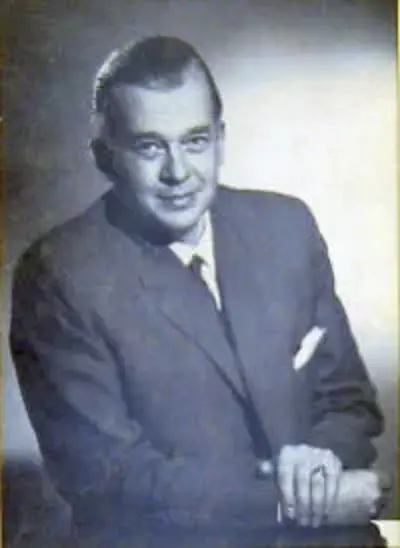
Ernst Friedrich Schumacher CBE was a German-British statistician and economist who is best known for his proposals for human-scale, decentralised and appropriate technologies. He served as Chief Economic Advisor to the British National Coal Board from 1950 to 1970, and founded the Intermediate Technology Development Group (now known as Practical Action) in 1966.
