Gil Scott-Heron Quotes
I have a novel that I can write. It's about three soldiers from Somalia. Some babies have been disappearing up on 144th Street, and I speculate later on what happened to them and how they might have been got back. These guys are dead, all three, and they have a chance in the afterlife to do something they should have done when they were alive.
Wilkinson, Alec. "New York Is Killing Me." The New Yorker, Condé Nast, 9 Aug. 2010.


Nathaniel Gordon was the first American slave trader to be executed after the slave trade was made illegal. The Erie was his slave ship where, as was typical, many of the captured Blacks, died as a result of the inhuman conditions. Although Gordon was the first person executed in America, the act making the slave trade an act of piracy dated from 1820. See {68753} .


Nathaniel Bacon had led a rebellion in Virginia and had routed the Governor’s troops and caused him to flee leaving control of Virginia to Bacon and his followers who were far more democratic and advanced. However Bacon succumbed to swamp fever, and his followers could not hold the colony together giving the Governor a chance to establish his authority. He then went on a vengeful reign of terror, executing all of Bacon’s followers he could get his hands on. With no danger to the authority of the Crown, King Charles felt that Berkeley had gone too far. The King’s father Charles I had been executed in the aftermath of the English Civil War, but he had executed far fewer than Berkely had done in Virginia.

In 1920 in the midst of a wave of anarchist bombings, two men in Braintree, MA were murdered in an armed robbery. Vanzetti and another political anarchist, Ferdinando Nicola Sacco, were charged with the crime. While anarchy was a non-violent philosophy for many, there was another movement imported from Europe who used bombings as a method of terror and protest to achieve their political aims. Vanzetti and Sacco were of the former type with no criminal record whatsoever but both were considered politically undesirable and part of the terrorist anarchist movement that had been striking in a number of cities. Most Americans saw little difference between the anarchists and the communists although there were foes. These anarchist men were tried, convicted, and sentenced to death for the robbery and murders despite what was very flimsy and contradictory evidence. In Vanzetti’s case, the evidence against him was the fact that 2 of the shell casings from the crime scene were according to the police fired from the same type of Colt pistol that Vanzetti owned. However, 300,000 other people owned the same type of gun, and ballistics scientific evidence later showed that the shells could not have been fired from Vanzetti’s gun. The case became a worldwide cause celebre with politics, police and judicial misconduct. Even today, there is no clear evidence of either their guilt of innocence (although there was even less evidence against Vanzetti), However, the trial brought more publicity to the anarchist political philosophy than the defendants could have imagined. It also called the finality of capital punishment into question and caused major examination of the police, prosecutorial, judicial systems and even the defense attorneys. The two men were electrocuted on August 23, 1927 amid protests the world over. See {625975} and {600317} for example.


There were many citizens who were very dubious about Dutero. In addition to his wildly flamboyant oratory, he advocated the exta judicial killing o suspected drug dealers, and as a mayor had actually personally murdered a few as an example for the police who were at first reluctant.


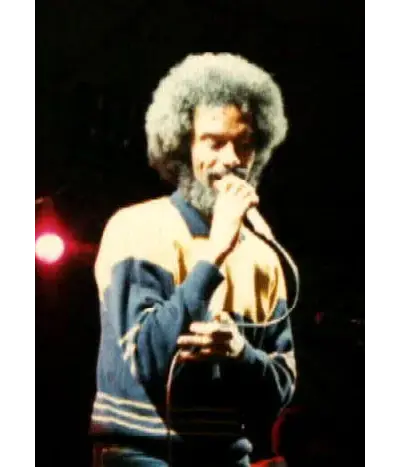
Gilbert Scott-Heron was an American soul and jazz poet, musician, and author, known primarily for his work as a spoken-word performer in the 1970s and 1980s. His collaborative efforts with musician Brian Jackson featured a musical fusion of jazz, blues, and soul, as well as lyrical content concerning social and political issues of the time, delivered in both rapping and melismatic vocal styles by Scott-Heron. His own term for himself was "bluesologist", which he defined as "a scientist who is concerned with the origin of the blues". He is considered by many to be the first rapper ever.
