Norma McCorvey Quotes
I don't think there is a good reason for an abortion, but Dr. Jasper made me really realize it was just a racket. He was just doing it for the money. He didn't care about the women.
McCorvey, Norma, and Gary Thomas. Won by Love: Norma McCorvey, Jane Roe of Roe v. Wade, Speaks Out for the Unborn As She Shares Her New Conviction for Life. Thomas Nelson, 1998.


Note, that like other feminist leaders of the time, she opposed abortion. However, between the economic pressures and the illegality of birth control devices and information provision, abortion was a critical decision that had to be faced by many women. Later, feminist leadership had to come to grips with the issue of who makes the decision in these areas, and placed the right of the woman to make these decisions, as opposed to husbands, fathers and government, as the highest priority. Then, when the drivers for abortion could not be eliminated, it was women who were criminalized. Feminists then fought for the right of abortion and the right of the woman to make decisions, but feminine leadership has never—in America—been advocates of abortion as opposed to the right of abortion, a subtlety that often is lost.


At the time the United States was the only developed country where the early abortion drugs were not available without a doctor's prescription. Ironically the drugs were even safer than the previous surgical abortion procedures where were already extremely safe. But the politics of the "culture wars" at the time obstructed scientific and medical decision making at the FDA.


At that time Einstein was way out ahead of most of the world in the sense that in the following years, Europe, The United States and a large number of other countries ended up adopting precisely the policy that he recommended in 1929.

The argument she made is that a woman should not be required to risk her life if she does not want to. Other than military conscription, there is no other aspect of American law whereby the society forces a citizen to risk their life.
The argument she made is that a woman should not be required to risk her life if she does not want to. Other than military conscription, there is no other aspect of American law whereby the society forces a citizen to risk their life.

In what may be the first written record of abortion in the "new world"


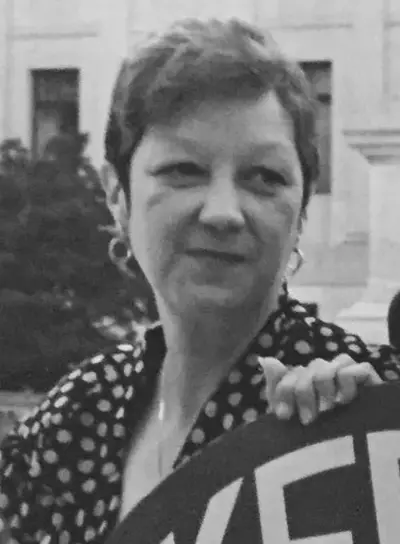
Norma Leah Nelson McCorvey, better known by the generic legal pseudonym "Jane Roe", was the plaintiff in the landmark American legal case Roe v. Wade in which the U.S. Supreme Court ruled in 1973 that individual state laws banning abortion were unconstitutional.
