Kenneth Lay Quotes
I don't think I'm a criminal, number one.
Lay, Kenneth. "Enron's Ken Lay Speaks Out." Larry King Live, CNN, 18 May 2004.


This is one of the earliest examples of attempting to reduce crime by altering community norms.


This is the first appearance of the principle which guides law enforcement in most of America and the other industrialized democracies around the world. Texas and some other localities have rejected this notion and see the occasional execution of an innocent person the cost we must pay in order to preserve law and order.

In 1920 in the midst of a wave of anarchist bombings, two men in Braintree, MA were murdered in an armed robbery. Vanzetti and another political anarchist, Ferdinando Nicola Sacco, were charged with the crime. While anarchy was a non-violent philosophy for many, there was another movement imported from Europe who used bombings as a method of terror and protest to achieve their political aims. Vanzetti and Sacco were of the former type with no criminal record whatsoever but both were considered politically undesirable and part of the terrorist anarchist movement that had been striking in a number of cities. Most Americans saw little difference between the anarchists and the communists although there were foes. These anarchist men were tried, convicted, and sentenced to death for the robbery and murders despite what was very flimsy and contradictory evidence. In Vanzetti’s case, the evidence against him was the fact that 2 of the shell casings from the crime scene were according to the police fired from the same type of Colt pistol that Vanzetti owned. However, 300,000 other people owned the same type of gun, and ballistics scientific evidence later showed that the shells could not have been fired from Vanzetti’s gun. The case became a worldwide cause celebre with politics, police and judicial misconduct. Even today, there is no clear evidence of either their guilt of innocence (although there was even less evidence against Vanzetti), However, the trial brought more publicity to the anarchist political philosophy than the defendants could have imagined. It also called the finality of capital punishment into question and caused major examination of the police, prosecutorial, judicial systems and even the defense attorneys. The two men were electrocuted on August 23, 1927 amid protests the world over. See {625975} and {600317} for example.


He is remembered today as the "Hanging Judge" of the American Old West. The two statements of his motto are contradictory unless all trials were perfect and all police, prosecutors, defense lawyers, defendants and witness always told the truth, and never made mistakes. This judge never followed the basic principle laid down by Blackstone regarding criminal law. See {594956}.

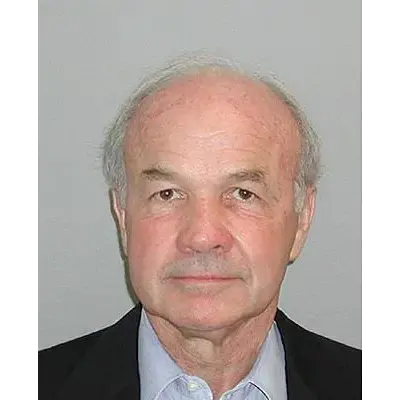
Kenneth Lee Lay was the founder, CEO and chairman of Enron who was heavily involved in the eponymous accounting scandal that unraveled in 2001 into the largest bankruptcy ever to that date. Lay was indicted by a grand jury and was found guilty of 10 counts of securities fraud at trial. Lay died in July 2006 while vacationing in his house near Aspen, Colorado, three months before his scheduled sentencing. A preliminary autopsy reported Lay died of a myocardial infarction (heart attack) caused by coronary artery disease; his death resulted in a vacated judgment.
