Roger Ebert Quotes
I don't think Bush was legitimately elected President.
Ebert, Roger. Interview with Matthew Rothschild. The Progressive, vol. 68, no. 11, Nov. 2004.

Although there were many irregularities in the 2000 election and many thought that Bush was not the rightful winner, Nadar’s statement is ironic. He entered the race as the Green Party Nominee and siphoned off many more votes from Gore than from Bush. In Florida, the pivotal state, Gore lost by less than 600 votes and but for Nader, Gore would have won and become President. Then for him to later blame Bush’s maneuvers for Gore’s defeat, ignoring his own determinative role struck most observers as the height of selective analysis.


In the razor thin 2000 Presidential election the Republican controlled Florida legislator called a special session to name their own electors to go to the electoral college. The Governor, Jeb Bush, was the brother of the Republican candidate.

Description of the 1876 race between Samuel J. Tilden and Rutherford B. Hayes. This election was very similar to the 2000 Bush v. Gore election. Tilden received more votes and there were shady dealings in Florida and other states which went to Hayes. Instead of the Supreme Court making the final decision as in 2000, a special Congressional Commission gave the Presidency to the candidate for whom fewer people had voted.

Al Gore had substantially won the popular vote but needed Florida to win the electoral vote. There had been a series of vote counting irregularities with many people being denied the right to vote to the point that no one was sure who had won Florida. The election moved from the ballot box to the courts and the Florida Supreme Court ruled that there should be some recounts in areas where Bush had supposedly won. The Bush forces and the Republicans appealed to the Supreme Court where the judges all reversed their traditional positions to support the party who had nominated them. Liberals who usually voted to have the Federal government override the states, voted for Florida to be upheld. Conservatives who usually supported the right of the States to decide such things without Federal Interference, voted to overturn the State Supreme Court. There were 5 Republicans and 6 Democrats and George W. Bush won the election by one judge’s vote.


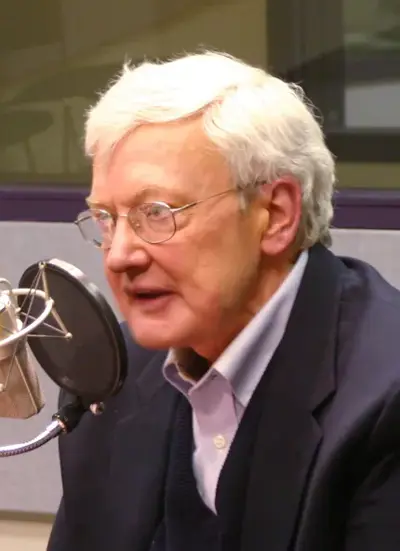
Roger Joseph Ebert was an American film critic, film historian, journalist, screenwriter, and author. He was a film critic for the Chicago Sun-Times from 1967 until his death in 2013. In 1975, Ebert became the first film critic to win the Pulitzer Prize for Criticism. Neil Steinberg of the Chicago Sun-Times said Ebert "was without question the nation's most prominent and influential film critic," Tom Van Riper of Forbes described him as "the most powerful pundit in America," and Kenneth Turan of the Los Angeles Times called him "the best-known film critic in America."
