Ruth Bader Ginsburg Quotes
I don’t see any problem with having proceedings televised. I think it would be good for the public.
Ruth Bader Ginsburg, U. S. Supreme Court Justice, Congressional Testimony, July 20, 1993
Sourced by: Eigen's Political and Historical Quotations


The George W. Bush administration was a very ideological one as opposed to pragmatic. They would not tolerate public officials who would say anything that might undermine an administrative ideological position. In particular, they did not want government scientists releasing any data or information that was not totally consistent with their ideology and program. They introduced a new policy within the government whereby no one could talk to a reporter or make a public speech or deliver a professional paper without first getting approval of administration “public affairs” agents first. Government scientists and other officials had never before been censored like this. Important scientific studies were not made public where they might not support the administration ideological positions. See {614691}.


Most politicians and their families do not consider these as unimportant and many resent the endless intrusion into these aspects of life. Mrs. Roosevelt did so it was no problem for her—she even wrote about them in her daily newspaper column. All her family doings were completely open as were her political and administrative and professional activities. She welcomed press to accompany her anywhere whenever they wanted. Her view of her private domain was her private thoughts. This was a great attitude to have for a politicians, but it is rare.

And the New York press is probably the most difficult and cynical in the world.


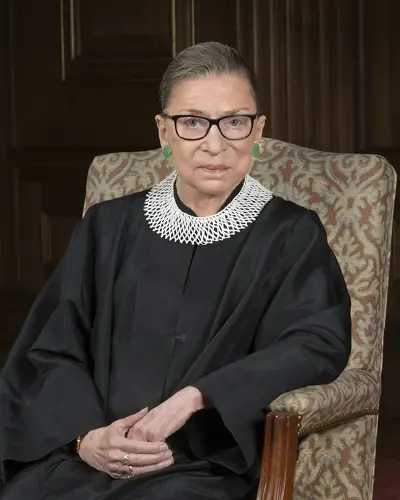
Joan Ruth Bader Ginsburg was an American lawyer and jurist who served as an associate justice of the Supreme Court of the United States from 1993 until her death in September 2020. She was nominated by President Bill Clinton, replacing retiring justice Byron White, and at the time was generally viewed as a moderate consensus-builder. She eventually became part of the liberal wing of the Court as the Court shifted to the right over time. Ginsburg was the first Jewish woman and the second woman to serve on the Court, after Sandra Day O'Connor. During her tenure, Ginsburg wrote notable majority opinions, including United States v. Virginia (1996), Olmstead v. L.C. (1999), Friends of the Earth, Inc. v. Laidlaw Environmental Services, Inc. (2000), and City of Sherrill v. Oneida Indian Nation of New York (2005).
