Amber Rudd Quotes
I don't need to understand how encryption works to understand how it's helping the criminals.
Rudd, Amber. "Conservative Party Conference Fringe Event." The Conservative Party, 3 Oct. 2017.


Ironically, it was the case that there was even more hacking that was motivated by people who just wanted to prove that they could ‘breach a system’ and the more an organization claims that its data is secure, the more motivation there is for these hackers to demonstrate their prowess.


He had developed a mathematical algorithm for a computer encryption that would take years to break even for the most powerful supercomputers. The U. S. Government tried to prevent him from publishing the technique and formula, but he went ahead anyway. They then tried to accuse him of violating an Arms Export Control Act for allowing people in other countries to see it, but there were no legal grounds for indictment. The strong encryption method, PGP, can be used with almost any PC and internet transmission of files.


The law enforcement and the intelligence agencies have been claiming for a number of years that etrong encryption (encryption which no one can crack with existing technology) if used by the general public would really hinder law enforcement and espionage efforts. The Federal government actually obtained a court order prohibiting the inventor of the stong encryption frm sharing the equations and techniques with anyone--as blatant an infringement to the right of free speech as there was been. The order was ignored and although the government tried to intimidate the developer by threatening him with prison. He refused to comply and the government finally dropeed the case, as the courts would almost certainly find such a jailing unconstitutional. However, although they tell the courts that there is a clear and present danger if terrorists use encryption, no one had, up to that time, found a single case where being able to decypher the encryption would have prevented an attack.


Many computer experts and security operatives view this kind of advice and strategy as counter-productive as there are some computer security extremists who so harden computer systems and networks that they function poorly and cause really harmful operational problems. The classic case was the FBI agent in Minnesota who before 9-11 had information that Muslims foreigners were taking flying lessons. She wanted to get the information to the national security FBI people, but she was not allowed to send the information by e-mail. Instead she had to use a "secure" system that was much slower and could not be viewed by the people who might have been able to connect the dots and do something about it. The FBI has now a better balance between functionality and security, but it is a good example of how "security fanaticism" can make us less safe.


In addition to the hackers who break into websites for monetary gain, or spying for companies or governments, there are many why just love the challenge of hacking into computers and websites that authorities claim is secure. The reality is that there is no way to absolutely sure a computer or its contents as long as it is connected to the Internet. Those computers and sites that have nothing to hide and do not present a challenge to hackers of this type rarely have problems from them; their vulnerability is to the other hacker who can utilize their computer slo hack still others of paralyze their computer to extract a ransom for functionality. The analogy of the hackers to the barbarian hordes sacking Ancient Rome and the Mongolian hordes sacking Europe is one that many appreciated,

The FBI had obtained a court order requiring apple to write software that could hack into a person's iPhone. Apple, with most other hi-tech companies in support, filed a motion with the court opposing the order. The FBI shortly thereafter withdrew its request for the order saying that they had found other solutions, when they had originally told the court that there were no other solutions.

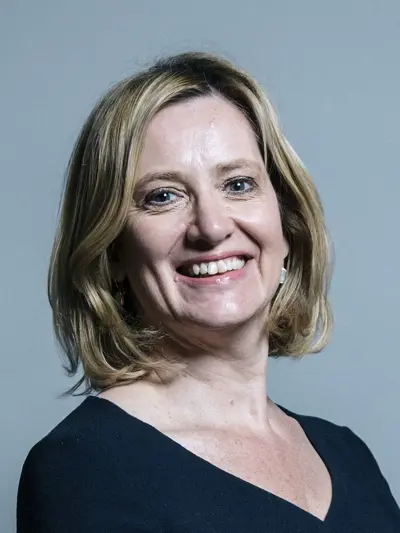
Amber Augusta Rudd is a British former politician who served as Home Secretary from 2016 to 2018 and Secretary of State for Work and Pensions from 2018 to 2019. She was a Member of Parliament (MP) for Hastings and Rye being first elected in 2010, representing the Conservative Party, and stood down from parliament in 2019. She identifies herself as a one-nation conservative, and has been associated with both socially liberal and economically liberal policies.
