Henry Miller Quotes
I don't know whether you've ever had a woman eat an apple while you were doing it. Well, you can imagine how that affects you.
Miller, Henry. Tropic of Cancer. Obelisk Press, 1934, p. 143.


Usually, a prominent politician sending love notes to a mistress does not make for a notable quotation. However, in this bizarre instance, his passion was so great that he went to Argentina without telling his staff of the Lieutenant Governor where he was going. He disappeared for almost a week and the state was left without a chief executive. When he returned amidst the scandal, he refused to resign. That in itself was noteworthy when he had earlier called for the resignation of President William Clinton for sexual indiscretions which did not even affect the government as his indiscretions did. See {628239}.

Wilson was a very formal, seemingly distant, and unemotional leader. This quotation is fascinating in that it shows a side of Wilson’s personality that most people then and later never suspected. What makes it even more important, was that he wrote this letter just after the American ocean liner Lusitania had been torpedoed by the Germans and sunk with loss of American lives and the President was in the midst of a huge International Crisis that would culminate in America entering the First World War. Even that did not take Wilson’s mind off his sex life.


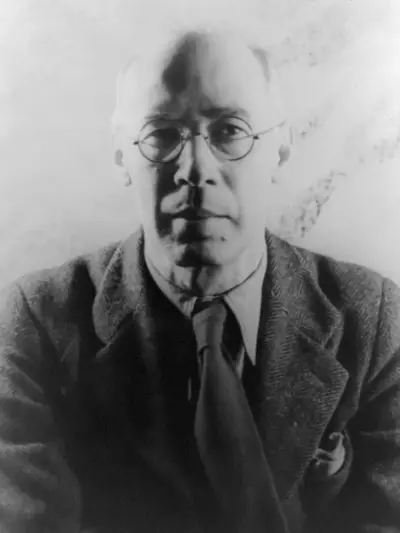
Henry Valentine Miller was an American writer and artist. He was known for breaking with existing literary forms and developing a new type of semi-autobiographical novel that blended character study, social criticism, philosophical reflection, stream of consciousness, explicit language, sex, surrealist free association, and mysticism. His most characteristic works of this kind are Tropic of Cancer, Black Spring, Tropic of Capricorn and The Rosy Crucifixion trilogy, which are based on his experiences in New York and Paris (all of which were banned in the United States until 1961). He also wrote travel memoirs and literary criticism, and painted watercolors.
