Grover Cleveland Quotes
I don't believe the American people want a Gelding in the White House.
Defending himself against the charge that he had fathered an illegitimate child:
Grover Cleveland, 1837-1908, 22nd & 24th President of the United States (Democrat, NY), Quoted in Smithsonian, October 1988
Sourced by: Eigen's Political and Historical Quotations


Trump, in contrast, to other president, in times of crisis, tendned to send tweets on the subject--often very political and divisive--instead of takeing the kind of leadership steps taht were taken by the otehr presidents of the 20th adn 21st century.
_0_PostageStamp_47x47.jpg "Chairman of the Joint Chiefs of Staff Navy Adm. Mike Mullen gives an interview to John Dickerson during the CBS news program Face the Nation in Washington, D.C., July 5, 2009. During the interview, Mullen discussed the wars in Iraq and Afghanistan, North Korea's recent missile tests and his recent visit to Russia. (DoD photo by Mass Communication Specialist 1st Class Chad J. McNeeley, U.S. Navy/Released)")


Actually, there are many in politics who to this day castigate Truman for his decision, but for Bloomberg’s generation and before, anyone would have pushed the button. And there are some who still fault Obama as technically, the U. S. had no right to violate Pakistani airspace and kill a resident of their state without any due process in the U. S. or Pakistan. Bloomberg would have easily pushed that button, but there are many officials who warned against it, and earlier Presidents—George W. Bush and Bill Clinton who did not authorize assassinations in foreign (allies) countries.


He was asked if he supported President Donald Trump, whose first 100 days was in the view of most political analysts, historians and many politicians--almost all Democrats and even many Republicans to be one of the worst on record. His popular approval rating was the worst after 100 days than any other President since support polls had been started. Kasich had stringly opposed Trup in the 2016 election. His answer reflected his view that al should support whatever president was in office even thought they might at the same to be very critical and opuitspoken about his weaknesses and failings. The President is everyone's President even though he may not act like it.

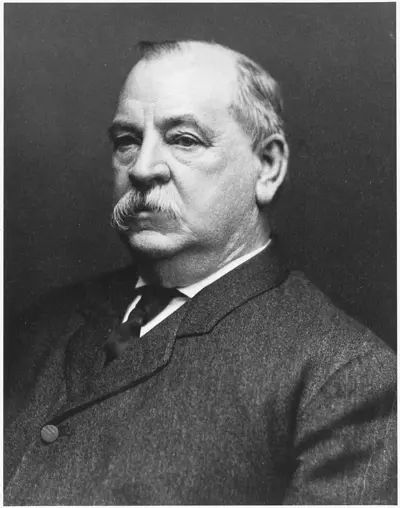
Stephen Grover Cleveland was an American politician and lawyer who served as the 22nd and 24th president of the United States from 1885 to 1889 and from 1893 to 1897. Cleveland is the only president in American history to serve two nonconsecutive terms in office. He won the popular vote for three presidential elections—in 1884, 1888, and 1892—and was one of two Democrats (followed by Woodrow Wilson in 1912) to be elected president during the era of Republican presidential domination dating from 1861 to 1933.
