Richard Dawkins Quotes
I do disapprove very strongly of labelling children, especially young children, as something like 'Catholic children' or 'Protestant children' or 'Islamic children.'
Dawkins, Richard. Interview. The Root of All Evil?, Channel 4, 9 Jan. 2006.


Prime Minister William Pitt, Edmond Burke, and Irish Patriot Henry Grattan had met with the king to discuss granting Irish Catholics rights to participate in government. The King was quite bigoted against Catholics, but England was at war on the continent and if Irish Catholics were angry enough, they might conspire with the Catholic French for an invasion of Ireland. When the Protestant members of the Dublin Corporation heard about the meeting, they immediately issued their own resolution to the King recommending the continued discrimination against Catholics. In a huge political battle in the English Parliament, Pitt and Burke were able to make some progress. The Penal Laws against Catholics that had been in force for a century were repealed. And Catholic men in Ireland were given the right to vote for members of the Irish Parliament. However, the Conservative Protestants blocked further reforms and Catholics were still not allowed to sit in Parliament of hold public office. Between this quotation and {639274} we see the Irish Protestants somewhat divided with the liberals wanting to give Catholics political equality and the Conservatives opposed.

At the time, the Muslim discrimination, terrible as it was, was not as bad as Christian discrimination against any non-Christians where death was very common. For many Muslims, the older historical values and practices are desirable if not mandatory today, while many others are modernists like most Christians who reject the Christian practices and morality of the past,

This illustrates what can happen if election districts are designed and desired to have a representative of a particular group. At one level it “recognizes” the reality of ghettoization. At the same time it encourages further ghettoization to prevent people from disenfranchivement.
The religious people in Saudi Arabia are very powerful and don't allow anyone to step on their toes.
Criticize them in the press.


This educational dominance by Islamic religion is not the case in all Muslim nations. Turkey has a completely secular curriculum, and Indonesia, the largest Muslim nation, has a balanced curriculum with modern subjects taught. Saudi Arabia and Pakistan are at the other end of the spectrum.
There is an interesting partial parallel between the concept of land ownership in Israel and other parts of Palestine and Native Americans. In Israel, a capitalistic democracy, land is bought and sold all the time, by private and public entities. Therefore land owned by a person can be sold to others with religion being no barrier. American Indians had no conceptual place for individual land ownership although they had been warring over hunting and living rights for centuries. But they challenged the rights to use land as being something different from ownership of the land which some Indians believe it only vested in the tribe—the Nation. The Palestinians came up with a wrinkle by having the Supreme Religious Authority of Jerusalem rule that it was illegal for Muslims to sell land to Jews, then all land transfers to Jews are really not legal and this land is part of the “occupied territory.” So by this view, all sales of Israeli land from Muslim to Muslim and Jew to Muslim are legal. However, this Islamic legal propositions means that Jews can NEVER acquire land. This has been extended to government and NGOs so that it fine for Muslim Governmental Agencies to take land under eminent domain concepts but not so for a Jewish governmental agency. While there are few who see any legal validity in international law to this concept, it is culturally, religiously and legally enforced. Many Arabs have been murdered in the streets just on the accusation that they sold land to Jews.

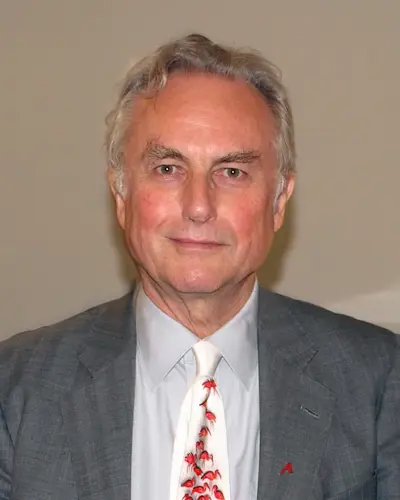
Richard Dawkins FRS FRSL is a British ethologist, evolutionary biologist, and author. He is an emeritus fellow of New College, Oxford, and was the University of Oxford's Professor for Public Understanding of Science from 1995 until 2008. An atheist, he is well known for his criticism of creationism and intelligent design.
