Robert Mueller Quotes
I do believe when there are advances in technology that it is important to balance the privacy interests affected with the investigative take that you might get from that technology.
Mueller, Robert S. Hearing before the Committee on the Judiciary. United States Senate, U.S. Government Printing Office, 2011.


This quotation is particularly interesting when compared with {633126} that he said in his First Inaugural Address. His idealism was tempered some by his first 4 years in the Presidency.


He was referring to all the data that health insurance companies, retail stores, vendors such as Amazon.com, credit reporting companies, maintain on most Americans. He made the pint that private sources maintain much more private information on Americans than does the government. People acquiesce as they perceive some benefit.


He was the Chairman of the Senate Judiciary Committee. The intelligence and law enforcement advocates of reducing privacy rights so that law enforcement can prevent acts of terrorism frame the question as a tradeoff between civil right and safety. However, as Leahy and many others point out, we would not be much safer if we gave up all our ivil rights. Further, hundreds of thousands of American have given their lives so that we would have those civil rights. Without them what are we protecting.

The call for embedding the balance in the law is in contrast to the past where the balance was left to the discretion of the intelligence agency leadership but technological limitations curtailed their ability to unbalance things too much.

Critics of NSA observe that there is a fundamental difference between government invasion of privacy and that of corporations in that the Government can deprive a citizen of his/her liberty or even life while corporations can just invade their privacy, embarrass them, or hurt their economic status. Counter-critics rejoinder is that 99 percent of all the specific abuses of privacy and damages to citizens in the U. S. from massive data collection are made by private corporations, not the NSA or other government agencies.

The FBI had obtained a court order requiring apple to write software that could hack into a person's iPhone. Apple, with most other hi-tech companies in support, filed a motion with the court opposing the order. The FBI shortly thereafter withdrew its request for the order saying that they had found other solutions, when they had originally told the court that there were no other solutions.
_0_thumbnail_47x47.jpg)


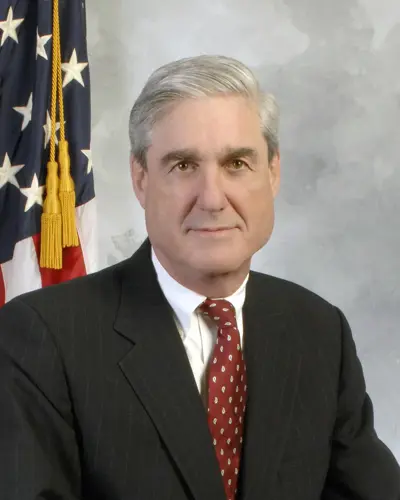
Robert Swan Mueller III is an American lawyer and government official who served as the sixth Director of the Federal Bureau of Investigation (FBI) from 2001 to 2013.
