Henryk Sienkiewicz Quotes
I consider that in dialectics I am the equal of Socrates. As to women, I agree that each has three or four souls, but none of them a reasoning one.
Sienkiewicz, Henryk. Quo Vadis: A Narrative of the Time of Nero. Translated by Jeremiah Curtin, Little, Brown, and Company, 1896.


Women were not, in the decisions of Canadian courts “Persons.” As such they were not allowed to serve as public officials and legislators. In 1929 the Judicial Committee of the Privy Council reversed previous interpretations and declared women eligible for all public offices. It became known as “The Persons Case.”

She was prescient. The amendment was never ratified by enough states.


She is vehemently opposed to allowing women to serve in the armed forces.


Puglia was an anti feminist. The stoa was the city square where men commonly congregated and discussed politicis.

Much of the culture of sexism and racism is perpetuated by language—especially the language of leaders, role, models, and authority figures. “Political correctness” cannot, in a free society, be enforced on anyone. However, making people aware of the implication of certain kinds of language usage is important provided it doesn’t cross the line of curtailing freedom of speech. People who want to perpetuate sexism by their choice of language have the right to do so in America. What is sad, however is the many people who are perpetuating sexism without ever intending to do so. Abdul-Jabbar has been a leader who has made many male sports figures more aware if the implications of their language usage.


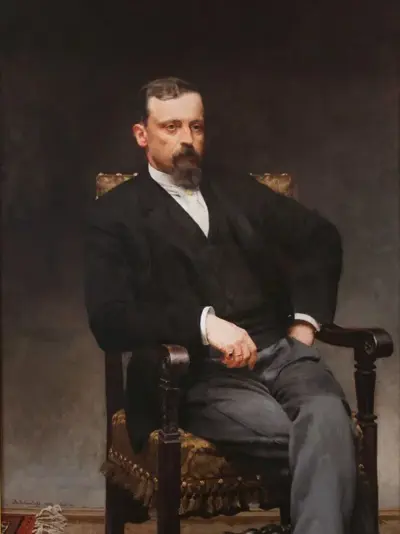
Henryk Adam Aleksander Pius Sienkiewicz, also known by the pseudonym Litwos [ˈlitfɔs], was a Polish journalist, novelist and Nobel Prize laureate. He is best remembered for his historical novels, especially for his internationally known best-seller Quo Vadis (1896).
