Naguib Mahfouz Quotes
I consider Khomeini's position dangerous. He does not have the right to pass judgment-that is not the Islamic way.
Mahfouz, Naguib. "Naguib Mahfouz, The Art of Fiction No. 129." Interview by Charlotte El Shabrawy. The Paris Review, vol. 34, no. 129, Summer 1992.


He was discussing the problem of negotiating with the Iranian government which was an unelected, dictatorial theocracy.


This quotation illustrates one interesting difference between Muslim fundamentalists and the Jewish and Christian fundamentalists. All three insist that whenever the world of God has appeared in holy scripture, it must be followed and not be eroded by time and modernity. However, the Islamic fundamentalists also believe that no other laws, regulations or norms are needed to cope with change and modernity while the fundamentalist Christians and Jews do allow for additional legislation to govern areas on which holy scripture is silent.

Gabriel exaggerates in the sense that while the quotation is correct for many Muslims, it is by no means true of all. Iran for example is an Islamic theocracy, but Turkey is a 99 percent Muslim nation which is totally secular and in some ways is much more restrictive of Islamic teaching and practice than most secular democracies. The fundamentalist Muslim view of the state and religion is essentially the same as the ultra orthodox Jews and Christians. It is true that a greater proportion of Muslims believe in the merging of civil and religious law than Jews and Christians, but by no means all. The non Arab Muslims are much less likely to see the unity of state and religion.

A fatwa is a legal / theological ruling or decision made by an Islamic legal expert. Many disagree with each other just as American legal opinions often disagree.


Theological & Legal Expert. The Sunnah, like the Koran, has statements of the Prophet, Mohammad. A fatwa is a religious legal ruling. This particular Fatwa shows the great difference between the Islamic State and a Republic or Democracy. In the latter forms, any religious practices must be consistent with the Constitution. Even though blasphemy might be prohibited by a religion, the United States Constitution for example protects anyone’s right to be blasphemous. In the Islamic system any constitution or law is subservient to and must be consistent with, the sayings of the Prophet Muhammad. In that sense, unless the Muslim populated nation is secular like Turkey, then the governments are partial or total theocracies.

The last Caliph of the Muslims was removed in 1924 as part of the Turkish Reform. The position has had attraction for many Muslim leaders who saw themselves in the role, but since 1924, nationalism and modernism and the lack of an effective international Muslim leader has precluded it. This anti-revolutionary sentiment of the Islamic political state that is so traditional, may in part account for the Islamic tolerance of autocratic regimes. Note that the distinction between religious responsibilities and civil are important. Tyranny must be tolerated but not blasphemy or heresy. Traditional Muslims provide more tolerance and forbearance for a leader’s civil failings than religious. But Muslims were not the only people to do this. A British prime minister had a view with the same conservative logic. See {639130}. The ancient Jewish Macabean revolt against the Jewish king was all based on failure to perform required religious duties of sacrifice as opposed to tyranny and poor government which also existed. Popes excommunicated Kings for religious reasons, not because of their civil failures at governing. Holding rulers accountable for civil performance is a relatively new concept yet is indispensible in a modern democracy.


al-Mansur Abu Ali. The Caliph was trying to return to Muslim Fundamentalism.

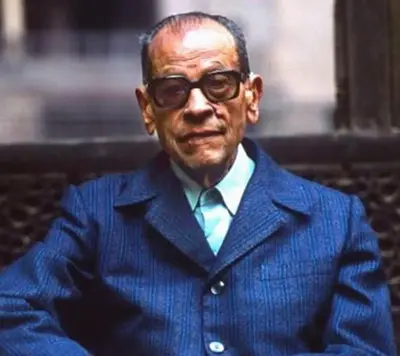
Naguib Mahfouz was an Egyptian writer who won the 1988 Nobel Prize for Literature. He is regarded as one of the first contemporary writers of Arabic literature, along with Taha Hussein, to explore themes of existentialism. He published 34 novels, over 350 short stories, dozens of movie scripts, hundreds of op-ed columns for Egyptian newspapers, and five plays over a 70-year career. Many of his works have been made into Egyptian and foreign films.
