Friedrich Hayek Quotes
I can have little patience with those who oppose ... the theory of evolution or what are called "mechanistic" explanations of the phenomena of life because of certain moral consequences which at first seem to follow from these theories, and still less with those who regard it as irrelevant or impious to ask certain questions at all. By refusing to face the facts , the conservative only weakens his own position.
Hayek, Friedrich A. "Why I Am Not a Conservative." The Constitution of Liberty, University of Chicago Press, 1960, p. 404.


While many people in America say they do not “believe in” evolution almost all of them do not know what evolution is much less understand what it is that they think is false. There are very few people who have studied evolution who reject it as being without merit in explaining life forms and their history. Almost all who are against it are religious fundamentalists who take the Judeo-Christian Bible literally. For their particular religion, evolution is a false doctrine, but there are many major religions in America for whom evolution is no problem. For example, Quakers, Unitarians, Congregationalists, Episcopalians, Lutherans, Reform Jews, Roman Catholics, Eastern Orthodox just to list some. Creationism, of which the quote author is an advocate, is an excellent religious solution to the contradiction between Evolution and the literal word of the Bible, but it is such terrible science, that it is not even considered science or taught in science curricula.


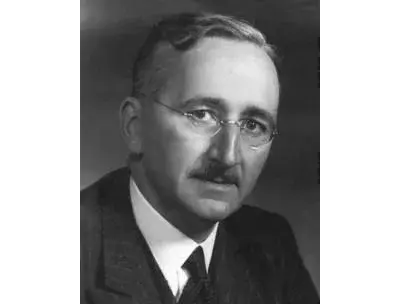
Friedrich August von Hayek CH FBA, often referred to by his initials F. A. Hayek, was an Austrian-British economist and philosopher who is best known for his defence of classical liberalism. Hayek shared the 1974 Nobel Memorial Prize in Economic Sciences with Gunnar Myrdal for his "pioneering work in the theory of money and economic fluctuations and [...] penetrating analysis of the interdependence of economic, social and institutional phenomena". His account of how changing prices communicate information that helps individuals co-ordinate their plans is widely regarded as an important achievement in economics, leading to his Nobel Prize.
