Emile Durkheim Quotes
I can be free only to the extent that others are forbidden to profit from their physical, economic, or other superiority to the detriment of my liberty.
Durkheim, Emile. The Division of Labor in Society. Translated by George Simpson, The Free Press, 1933, p. 384.


Many anti-socialists criticize the political philosophy of socialism on the grounds that it denies citizens personal freedom. Yet most socialists claim that a central doctrine is to give citizens more freedom. The difference is in the type of freedom that they each emphasize. Most socialists observe that the major limits to the freedom of the vast majority of the people in the world are put there by the lack of economic resources. So increasing freedom to them is to decrease the de facto limits that are placed on people by the economic system. The person working for a large corporation that is a monopoly or the only employer in the area, and has a family and no saved money to move to another area, has no freedom to live where he would like. So the socialists emphasize getting the person more money and diminishing the power and the options of the employers to de facto restrict the corporations and businesses. The capitalists look at socialism and see a system that would diminish the freedom of the corporations and those people who own and manage them and argue that if they are successful enough the workers will fare better and be able to gather and save the resources that they might need to move, change careers and have more de facto freedoms." Viscount Prestwood


Although Holland was more egalitarian and fairer than most nations of Europe, it was not quite as desirable as Diderot described it. He only visited a part of Holland that was the most educated and affluent.


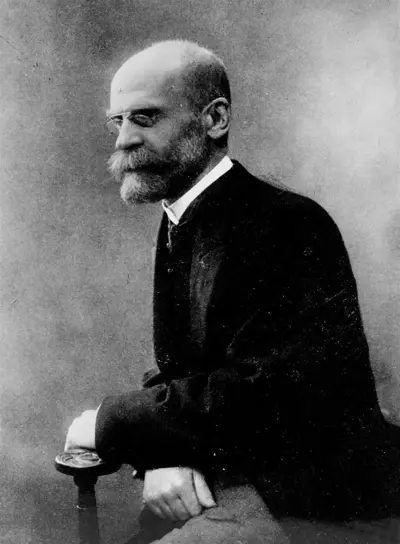
David Émile Durkheim was a French sociologist. He formally established the academic discipline of sociology and, with Max Weber, is commonly cited as the principal architect of modern social science.
