Pol Pot Quotes
I came to join the revolution, not to kill the Cambodian people. Look at me now. Am I a violent person? No. So, as far as my conscience and my mission were concerned, there was no problem.
Saloth Sar Pol Pot. He was responsible for the brutal killing of over 1 million of his own people.
Pol Pot, 1925–1998, Cambodian Maoist Revolutionary Dictator of Cambodia, Leader of the Khmer Rouge, Brother Number3 Quoted in Nate Thayer, "Day of Reckoning", Far Eastern Economic Review, October 1997
Sourced by: Eigen's Political and Historical Quotations

Saloth Sar Pol Pot. He exterminated over 1 million of his own people who were obstacles to his idea that all people should live in villages. Victims included people who were city residents, intellectuals which meant anyone with an education, and even people who wore glasses were killed.
Saloth Sar Pol Pot. He was responsible for the brutal killing of over 1 million of his own people.
Saloth Sar Pol Pot. He was responsible for the brutal killing of over 1 million of his own people.

Under his and Pol Pot’s command, the Khmer Rouge exterminated nearly 2 million Cambodians. He was the number two often referred to as “Brother Number two.” In a 1998 corrupt bargain, the government agreed never to prosecute him for genocide or any of his crimes.
Saloth Sar Pol Pot. He was, like Adolf Hitler, one of the most terrible mass murderers in history.
Saloth Sar Pol Pot. The mass murders took place in “killing fields” where the victims were buried alive or hacked and bludgeoned to death and then buried in mass graves. The twisted logic was that the capitalists and educated people must be eliminated and therefore, cities must be eliminated. Pol Pot and his associates calculated that only 2 million people were really needed to run Cambodia if it was only a rural agricultural state. So anyone who did not farm or have those skills was unnecessary to their concept of a state. See {631144}.

The word “smashing” is a literal translation from the Khmer language. It is not used in the metaphorical sense as we are used to. To save money, arms, bullets and resources the Khmer Rouge method of execution was to “smash” the victim’s head in with a shovel or other implement. This slogan told people literally to murder their political enemies in this brutal way.
Saloth Sar Pol Pot. His view was that any small merchant or tradesman running a business was a capitalist, and all educated were enemies of the people. He moved entire populations out of the cities into the countryside where they would live as peasants or be murdered as about 20% of the entire population as. Therefore, in his warped view, the capitalists could no longer “control” Cambodia.
Saloth Sar Pol Pot. As a result of this order the mass murders took place in “killing fields” where the victims were buried alive or hacked and bludgeoned to death and then buried in mass graves. The twisted logic was that the capitalists and educated people must be eliminated and therefore, cities must be eliminated. Pol Pot and his associates calculated that only 2 million people were really needed to run Cambodia if it was only a rural agricultural state. So anyone who did not farm or have those skills was unnecessary to their concept of a state. See {631178}.


The Scientific Project that developed the Atomic Bomb. The focus of the scientists had been to beat the German’s who were terribly evil might develop a bomb first. After the defeat of some scientists began to have concerns about their purpose. Most were very distrustful of the army and believed little of what they were told, by the military at Los Alamos. However, in a remarkable our de force of leadership, Oppenheimer had the trust of virtually all of the staff. This memo and a briefing of the invasion plans of mainland Japan (see {629858} ) convinced the scientist to maintain their intense and punishing pace.

encouraging liberation movements in Eastern Europe Referring to Hungary

See {642191} and {642190} for other examples. The Second World War was not the first time Germany had committed war crimes and atrocities as a matter of government policy. Hitler and the Nazis then expanded on an evil tradition that was already embedded in the German militaristic culture and it from wanton murder to genocide.

Howe had written Franklin attempting to stave off a American break with England. Franklin, with the approval of the Continental Congress, replied.

The convoy was heading for the city of Alleppo that had been under siege by the government for weeks. 22 UN Aid Workers were killed and half the cargo was destroyed. Syria had been in a Civil War for a number of years, and the Government of Bashar al-Assad had committed one atrocity after another. A cease fire had been agreed to and the UN notified all parties to the war about the humanitarian convoy’s schedule and route. It was not known whether the government had decided to attack the convoy to put more pressure on the people in Aleppo to end their rebellion or the attack was made by local commanders of government troops who did not want to see the pressure on Aleppo lifted.

Describing the conquest and destruction of Jerusalem and the Second Temple in 70 AD.


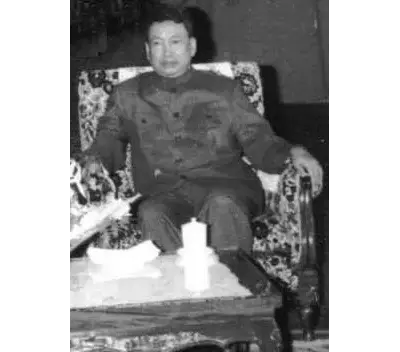
Pol Pot was a Cambodian revolutionary and politician who governed Cambodia as the Prime Minister of Democratic Kampuchea between 1975 and 1979. Ideologically a Marxist–Leninist and a Khmer nationalist, he was a leading member of Cambodia's communist movement, the Khmer Rouge, from 1963 until 1997 and served as the General Secretary of the Communist Party of Kampuchea from 1963 to 1981. Under his administration, Cambodia was converted into a one-party communist state governed according to Pol Pot's interpretation of Marxism–Leninism.
