Dolley Madison Quotes
I assume that you would not desire your wife the role of partisan.
Dolley Madison, 1768-1849, First Lady, Letter to her husband, James Madison
Sourced by: Eigen's Political and Historical Quotations


This relatively radical viewpoint regarding equal rights for women was expressed by Roosevelt as his Senior thesis at Harvard in 1880. In those days, the kind of scrutiny of everything a candidate ever wrote or said that is characteristic of modern politics, did not exist. It is very doubtful that if the Republican Party officials had ever known that he had espoused these views—even as a young student, that he ever would have risen so high in the party, much less get nominated at the Vice Presidential candidate which was his entree to the Presidency. When in office however, there is no record of him reviving his youthful proposal that women who marry retain their maiden names.


She was 1 of the 4 women who entered Oberlin College in 1837 thus becoming the first co-educational institution of higher education in the United States.


She had just been appointed as the first female vice president of the Federal Council of Churches. Her husband was one of the leading theologians in the country and the Dean of the Harvard Divinity School.
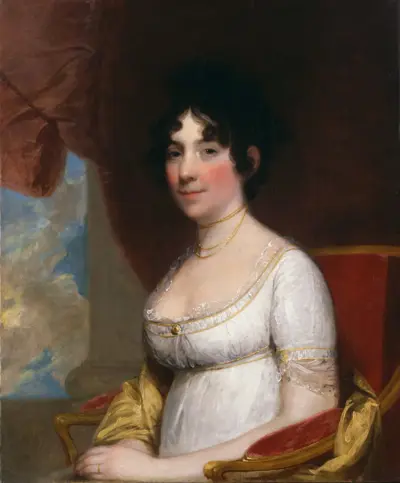
Dolley Todd Madison was the wife of James Madison, President of the United States from 1809 to 1817. She was noted for holding Washington social functions in which she invited members of both political parties, essentially spearheading the concept of bipartisan cooperation, albeit before that term was in use, in the United States. While, previously, founders such as Thomas Jefferson would only meet with members of one party at a time, and politics could often be a violent affair resulting in physical altercations and even duels, Madison helped to create the idea that members of each party could amicably socialize, network, and negotiate with each other without resulting in violence. By innovating political institutions as the wife of James Madison, Dolley Madison did much to define the role of the President's spouse, known only much later by the title First Lady—a function she had sometimes performed earlier for the widowed Thomas Jefferson.
