Gore Vidal Quotes
I am told the Cheney-Bush team dislikes their junta being compared to the Nazis. If they ceased behaving like Nazis, no comparison would come to mind.
Vidal, Gore. Imperial America: Reflections on the United States of Amnesia. Nation Books, 2004.


Dodd, in Berlin from 1933 to the onset of WWII, was able to see first hand what Hitler and the Nazi Movement was really like, Although he for the United States and Churchill for England warned early on, the politics of the times would not allow any action to stop or curtail Hitler. America, in particular, had a strong isolationist Republican wing and in addition, a small but loud core of pro Fascist, Hitler admirers such as Charles Lindburg, Father Coughlin, and Henry Ford. America had virtually no serious military capacity at the time, and with the Depression, FDR had all he could do to just gradually build up the military. By the time the Democracies realized that Dodd and Churchill were right, it was too late to prevent WWII. Dodd died in 1940 just when it was clear that he had been right.

This quotation brought Mises much criticism at the time and has destroyed his moral credibility for the rest of his career. Like many others who supported the wealthy ruling classes, he expressed admiration for Fascism. Worse he claimed that Nazi German and Italian Fascism saved Europe when subsequent events proved that they destroyed Europe along with 30-40 million people killed. However, unlike most of the right wing Fascist enthusiasts of the day, he did—in the last sentence of this quotation which is often omitted by critical quoters—observe that Fascism success would not be permanent or long lived. His lack of moral condemnation of Fascism and Fascists however was clear. Some of his apologists and decuples observe that his philosophy tended to avoid all kinds of moral judgments pro and con about almost everything. It was this lack of a moral / ethical framework that most of his critics point to as a great failing of his. Also, many argue that this is another example of Mises tendency to exaggerate. Mises also took great criticism on what he claimed were “best intentions”; this included virulent racial and religious discrimination, militarism, aggression and expansionism, persecution of the handicapped. Ironically much later, Mises admitted that all of the Nazi evil was clear before it was implemented, {632449}. Some scholars think that Mises who was almost amoral outside the context of economics, began to develop a moral awareness in the reality of the Nazi charnel that much of Europe had become. One problem is that a person like Mises loses much credibility because of his lack of moral sensibilities and moral perception of a way of life and then exaggerates so many of his examples. However, many of his ideas and insights are very important in man’s quest of an economic system that produces substantial increases in standard of living and development and at the same time assure a modicum of subsistence and dignity and a fair opportunity to achieve much more. Mises’s ideas should not be ignored because of the failings of Mises the man.

Egypt, after is Arab Spring ousting of it like time military dictator, suffered through and Islamic government regeime, but after that ended up electing a military strongman again who had little inclination towards democracy and was decidedly fascistic. In November 2013, the Robert F. Kennedy Center for Justice and Human Rights presented Omran with an award to honor her work and commitment to human rights in Egypt.


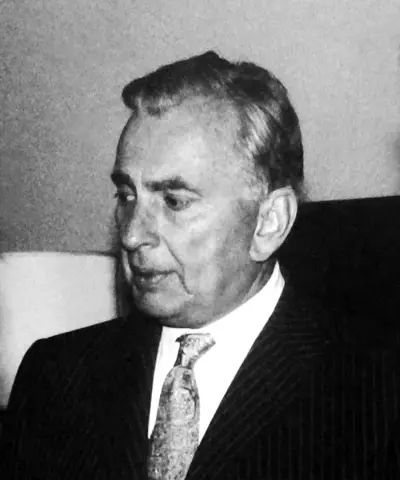
Eugene Luther Gore Vidal was an American writer and public intellectual known for his epigrammatic wit, patrician manner, and polished style of writing. Vidal was openly bisexual and his novels often dealt with LGBT characters, which was unusual at the time. Beyond literature, Vidal was heavily involved in politics. He twice sought office—unsuccessfully—as a Democratic Party candidate, first in 1960 to the United States House of Representatives (for New York), and later in 1982 to the U.S. Senate (for California).
