Charles B. Rangel Quotes
I am struck by how casually we as a nation react to the carnage in Iraq.
Rangel, Charles B. "Remarks on Iraq." Congressional Record, Government Publishing Office.


The description was of the battle field at Bull Run. The Times even then was very candid. The public was shocked and some thought it unpatriotic to print this.


Sherman had friends in the South and he saw rebellion and war coming. Most Southerners had a romanticized view of war and were so wrapped up in trying to preserve their economic and cultural way of life that they did not think through the implications of such a war. After and during the war, he was particularly angry with the Southerners who had brought such terrible casualties and destruction upon the land and its people.

His balanced judgment and concern for American Casualties changed during the Iraq War over a decade later where he insisted on taking steady American casualties even after Saddam had been deposed and American troops were in the middle of a sectarian civil war.


This may have been the origin of the famous Stalin later quotation of very similar sentiment {616657}. No one is certain if Stalin had ever seen this work. Or he might have come upon it independently. The original source does not mention Massigli by name. However the description of the “Diplomat vom Quai d’Orsay” fits Massigli and his expertise so we attribute it to him. However, he was not the first to express this idea. The Anglican Bishop of London, Beilby Porteus, appears to have been the earliest—See {627489}.


He was then a young Lieutenant.


This statement was made in the first phase of the Iraq war where Cheney and President Bush thought the war was won. After that there were thousands of Americans killed in the war. Critics of the administration war policy threw this quotation up to him.


This is one of the earliest descriptions of the post traumatic stress effects on the veterans surviving war.
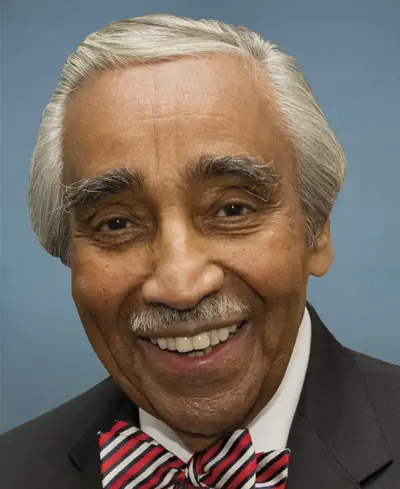
Charles Bernard Rangel is an American politician who was a U.S. representative for districts in New York from 1971 to 2017. A member of the Democratic Party, he was the second-longest serving incumbent member of the House of Representatives at the time of his retirement, serving continuously since 1971. As its most senior member, he was also the Dean of New York's congressional delegation. Rangel was the first African-American Chair of the influential House Ways and Means Committee. He is also a founding member of the Congressional Black Caucus.
