Yukio Mishima Quotes
I am one who has always been interested only in the edges of the body and the spirit, the outlying regions of the body and the outlying regions of the spirit. The depths hold no interest for me; I leave them to others, for they are shallow, commonplace. What is there, then, at the outer most edge? Nothing, perhaps, save a few ribbons, dangling down into the void.
Mishima, Yukio. Sun and Steel. Translated by John Bester, Kodansha International, 1970, p. 23.


“Margins” means edges. This quotation is very important for understanding the politics of telecommunications. In most subjects of political attention, it is important to observe what the majority of people should be doing and to look for national or regional trends. However, in technology in general and communications technology in particular, the important trends and occurrences almost always occur with a small group or a few people who first utilize, develop, and improve a technology. That technology then very rapidly diffuses into the society as a whole with all the regulatory and political problems that occur. So politically we must watch and regulate the margins because if not, technological progress occurs much faster than political progress. See {633622}.


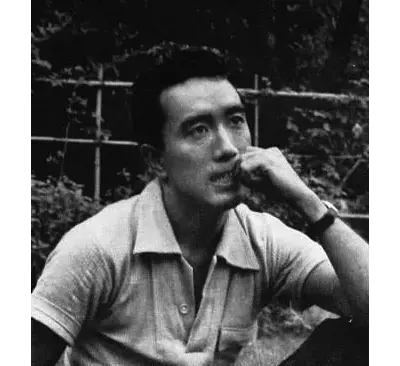
Yukio Mishima, born Kimitake Hiraoka (平岡 公威, Hiraoka Kimitake) was a Japanese author, poet, playwright, actor, model, Shintoist, nationalist, and founder of the Tatenokai (楯の会, "Shield Society"), an unarmed civilian militia. Mishima is considered one of the most important Japanese authors of the 20th century. He was considered for the Nobel Prize in Literature in 1968, but the award went to his countryman and benefactor Yasunari Kawabata. His works include the novels Confessions of a Mask (仮面の告白, Kamen no kokuhaku) and The Temple of the Golden Pavilion (金閣寺, Kinkaku-ji), and the autobiographical essay "Sun and Steel" (太陽と鉄, Taiyō to tetsu). Mishima's work is characterized by "its luxurious vocabulary and decadent metaphors, its fusion of traditional Japanese and modern Western literary styles, and its obsessive assertions of the unity of beauty, eroticism and death".
