Nathan Bedford Forrest Quotes
I am not here to pass civilities or compliments with you, but on other business. I have stood your meanness as long as I intend to. You have played the part of a damned scoundrel, and are a coward, and if you were any part of a man I would slap your jaws and force you to resent it. You may as well not issue any more orders to me, for I will not obey them... and as I say to you that if you ever again try to interfere with me or cross my path it will be at the peril of your life.
Wyeth, John Allan. Life of General Nathan Bedford Forrest. Harper & Brothers, 1899, p. 265.


Chavez frequently insulted officials and leaders of other countries. See linked quotes for examples.


La Guardia was a very short man and he had gone up to the much larger “poll watcher” and ripped his official button off his coat. The Tammany Hall political machine would appoint thugs as poll watchers to intimidate the voters. If the poll watcher was an "official" voters thought that they might have access to the ballot information and know whether or not they voted for the machine candidates. Their presense was often sufficient intimidation to assure party line voting by most people.

There were very few politicians who would dare to even unfavorably mention the KKK. Long however took them on directly.


Carter beat Kennedy in the Primaries bit lost to Ronald Reagan in the General Election.

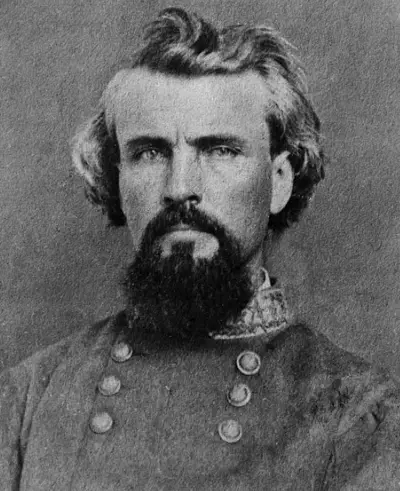
Nathan Bedford Forrest was a prominent Confederate Army general during the American Civil War and the first Grand Wizard of the Ku Klux Klan from 1867 to 1869. Before the war, Forrest amassed substantial wealth as a cotton plantation owner, horse and cattle trader, real estate broker, and slave trader. In June 1861, he enlisted in the Confederate Army and became one of the few soldiers during the war to enlist as a private and be promoted to general without any prior military training. An expert cavalry leader, Forrest was given command of a corps and established new doctrines for mobile forces, earning the nickname "The Wizard of the Saddle". His methods influenced future generations of military strategists, although the Confederate high command is seen by some commentators to have underappreciated his talents. Although scholars generally acknowledge Forrest's skills and acumen as a cavalry leader and military strategist, he has remained a controversial figure in Southern racial history for his main role in the massacre of several hundred Union soldiers at Fort Pillow, a majority of them black, coupled with his role following the war as a leader of the Klan.
