Bertrand Russell Quotes
I am looking forward very much to getting back to Cambridge, and being able to say what I think and not to mean what I say: two things which at home are impossible. Cambridge is one of the few places where one can talk unlimited nonsense and generalities without anyone pulling one up or confronting one with them when one says just the opposite the next day.
Russell, Bertrand. The Autobiography of Bertrand Russell: 1872-1914. London: George Allen and Unwin, 1967, p. 106.


In 1897 one of the most contentious political issues in America was that of “free silver”—allowing silver to back American currency as well as gold. The country’s economy could not grow because more currency could not be issued for want of gold to back it. Meanwhile, the U. S. had a great deal of silver. William Jennings Bryant {640992} and the Democrats {591769} advocated free silver, and the Republicans fought to maintain the gold standard. The president of the very conservative Brown University advocated free silver to the shock of the trustees. They sent Andrews a letter asking him not to speak publicly on the subject as it would jeopardize donations and endowments. Andrews resigned. The incident caused a national furor about academic freedom with the public and most of the alumni siding with Andrews. He rescinded his resignation but was pushed out the following year. Later, the trustees named a building after him.

In some universities would sometimes protest the selection of a commencement speaker and demonstrate. On some of these occasions the school administration withdrew the invitation. In addition to the problem described by Beckel, the university sells out its basic intellectual commitment to hear all ideas and points of view—regardless of how repugnant or evil. Commencement speakers tend to create a bigger problem because of the custom of the university granting the speaker an Honorary Degree. Whereas it is against the academic tradition to censor a speaker and having a speaker does NOT associate the University, the faculty or the students with the views of the speaker. But the granting of the Honorary Degree does imply an institutional approval and admiration of the speaker, and that is fair game for student protest. However in the beginning of the 21st century some extreme left wing students succeeded in intimidating spineless university administrators and trustees into censoring speech and the ideas of the speaker. This was typical behavior of the right wing brownshirts of the 1930s when it was the Fascists who were prohibiting certain speakers—usually left wingers. 80 years later it was the left wing extremists engaging in this undemocratic behavior.

She was dealing with a serious campus situation where an invited speaker, Chief of Police Kelly of New York City was prevented from giving his p resentation on the controversial “Stop and Frisk” rules by student protesters who opposed the practice. Brown’s tradition of hearing anyone on the campus regardless of point of view had been broken to the distress of most students, faculty and alumni.


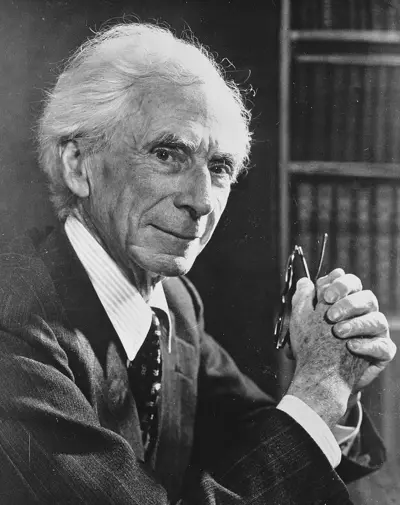
Bertrand Arthur William Russell, 3rd Earl Russell OM FRS was a British polymath, philosopher, logician, mathematician, historian, writer, social critic, political activist, and Nobel laureate. Bertrand Russell was one of the most influential and widely known intellectual figures of the twentieth century. In 1950 he was awarded the Nobel Prize in Literature for his extensive contributions to world literature and for his “rationality and humanity, as a fearless champion of free speech and free thought in the West.“
