Albert Einstein Quotes
I am convinced that some political and social activities and practices of the Catholic organizations are detrimental and even dangerous for the community as a whole, here and everywhere. I mention here only the fight against birth control at a time when overpopulation in various countries has become a serious threat to the health of people and a grave obstacle to any attempt to organize peace on this planet.
Einstein, Albert. Letter, 1954. The Ultimate Quotable Einstein, edited by Alice Calaprice, Princeton UP, 2010, p. 320.


In Burundi, family land is divided among the male children of a family. The average Burundian woman has 6.3 children at that time, nearly triple the international fertility rate. With this population growth rate, the plots of land for each person inevitably get smaller and smaller over time. At 10,745 square miles, Burundi is slightly smaller than the U.S. state of Maryland, but it holds nearly twice as many people: about 10 million. The small plots of land are inefficient to farm and provide subsistence. So the nation was in a crises as there was little industrialization and land was essential for existence for most Burundians. See {35807} and {35809}." Andre Florian Nbasimana


The Clinton Administration decided not to issue the directive. To do so would have embroiled the administration in a huge abortion debate as the NSC has previously observed that no nation has ever reduced its population growth without using abortion as one of the techniques. India, for example, utilized both abortion and sterilization—both offensive to segments of American public opinion.


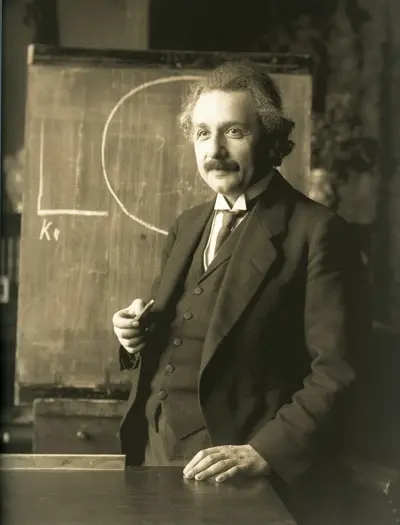
Albert Einstein was a German-born theoretical physicist, widely acknowledged to be one of the greatest physicists of all time. Einstein is known for developing the theory of relativity, but he also made important contributions to the development of the theory of quantum mechanics. Relativity and quantum mechanics are together the two pillars of modern physics. His mass–energy equivalence formula E = mc2, which arises from relativity theory, has been dubbed "the world's most famous equation". His work is also known for its influence on the philosophy of science. He received the 1921 Nobel Prize in Physics "for his services to theoretical physics, and especially for his discovery of the law of the photoelectric effect", a pivotal step in the development of quantum theory. His intellectual achievements and originality resulted in "Einstein" becoming synonymous with "genius".
