Gerald R. Ford Quotes
I am committed to furthering the self-determination of Indian communities but without terminating the special relationship between the Federal Government and the Indian people. I am strongly opposed to termination. Self-determination means that you can decide the nature of your tribe's relationship with the Federal Government within the framework of the Self-Determination Act, which I signed in January of 1975.
Ford, Gerald R. "Remarks to Representatives of American Indian Programs." Public Papers of the Presidents of the United States: Gerald R. Ford, 1976-77, U.S. Government Printing Office, 1979, p. 2043.

In the only presidential Special Message to Congress on the subject of Indians in American history:

More and more whites had been encroaching on land of the Chickasaw Reservation which the United States was bound to protect. However, soldiers fighting whites was politically unpalatable and the Government came up with the idea of providing land West of the Mississippi as a new reservation in exchange for the existing reservation. The Indians expenses of moving would be paid and they would be given generous provisions in the new lands. The U. S. negotiators were surprised when the translator for the Chickasaw negotiators made this speech which was then reported to the President and Congress. Andrew Jackson was strongly in favor of Indian Removal and he had forced other tribes out of their lands. Eventually the Government upped the ante and agreed to pay the Chickasaw the large sum of $3 million to move and they Chickasaw realized that if they did not accept, they would be removed as other tribes had been, The promised payment was delayed over Congressional arguments over appropriations but eventually the Chickasaw were paid.


While Jefferson was clear on this point, there were other forces and points of view that did not recognize Indian rights and were prepared to use force to obtain Indian lands. These, together with some Indians who made bad and sometimes corrupt bargains and treaties ceding land, produced the loss of most of the Indian land in America.


There was then legislation proposed to to nullify a number of Indian treaties. Indians themselves were divided as to the desirability. Mrs. Roosevelt favored negotiations and discussions with each tribe separately regarding their treaties as opposed to the proposed legislation which treated the tribes monolithically when indeed they were 500 separate tribes with different cultures, needs and desires.

Standing Bear and some other Indians left the Indian territory where the government had assigned their tribe and with an invitation went to live on another Indian reservation designated for another tribe. The Government sent the military police to take the Indians back to the Indian Territory. The Indians claimed that they had the right to live wherever they wanted and did not have to live in the place the government had assigned them. The Indians won and since then, Indians like all other Americans were free to go wherever in the country that they wanted so long s they were not trespassing or violating other laws.


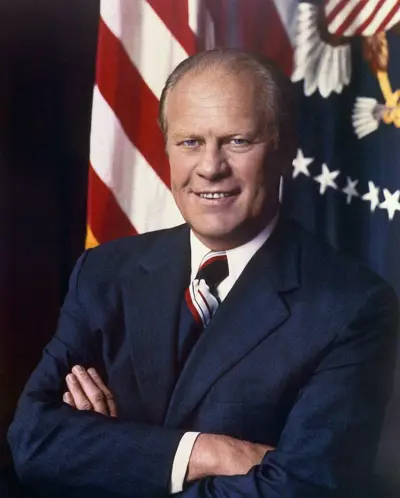
Gerald Rudolph Ford Jr. was an American politician and attorney who served as the 38th president of the United States from 1974 to 1977. A member of the Republican Party, Ford previously served as the 40th vice president of the United States from 1973 to 1974. To date, Ford is the only person to have served as both vice president and president without being elected to either office by the Electoral College.
