Ahmed Zewail Quotes
Human resources are just tremendous in Egypt but we need the science base.
Zewail, Ahmed. "Interview with Ahmed Zewail." Interview by Joanna Rose. NobelPrize.org, Nobel Prize Outreach, 2 Nov. 2001.

The high level of educational attainment and a good telecommunications infrastructure made Ireland a major high technology world power whose exports of software in 2000 were second only to the United States.


Alabama. Mississippi and the other states of the South have from the inception of the nation had a much poorer educational system (often no system at all). Even when Jim Crow discrimination was rampant in the South, the white schools were very poor and the Black schools terrible. At the end of the 20th century after integration, there were more serious attempts to improve education in the South and progress is being made to reach parity with the rest of the country. However, there is still in many Southern school boards hostility to science and other aspects of modern education and Southern states tend to censor school texts and library books this weakening the educational system. But progress is being made.

While Peres and many others think that the Arab nations can become developed countries, there are major barriers in the way. One is oil. No country that has had a great deal of oil has ever developed. Then there is education. Israel’s technological success requires a very high level of education in secular subjects which no Arab nation provides. The Western cultural values of inquiry, freedom of thought, individuality are were in large part developed from the traditional Jewish values. The Muslims had these at the early 2nd millineum. But political and religious forces since then, have created contemporary Arab cultures whose vaues are in many ways antithetical to modern technological development.


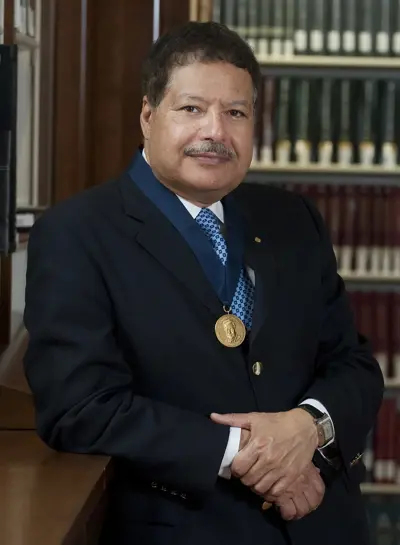
Ahmed Hassan Zewail was an Egyptian-American chemist, known as the "father of femtochemistry". He was awarded the 1999 Nobel Prize in Chemistry for his work on femtochemistry and became the first Egyptian to win a Nobel Prize in a scientific field. He was the Linus Pauling Chair Professor of Chemistry, Professor of Physics, and the director of the Physical Biology Center for Ultrafast Science and Technology at the California Institute of Technology.
