Albert Camus Quotes
Human rebellion ends in metaphysical revolution. It progresses from appearances to acts, from the dandy to the revolutionary.
Camus, Albert. The Rebel: An Essay on Man in Revolt. Translated by Anthony Bower, Vintage Books, 1991, p. 105.


This is not only attributed by reliable sources but apparently Roosevelt had said this on several occasions. The word “radical” has had different shades of meaning at different periods of American History. The origin of the word from the Latin means someone who wishes to change things very rapidly and not gradually. In the time of the Civil War, the majority of the Republicans proudly referred to themselves as “radicals” or “radical Republicans” because they wanted to abolish slavery immediately. In the late 19th century the word “radical” referred to anarchists. From the Russian Revolution onward “radicals” were communists who presumably wanted to change governments throughout the work through revolution—very rapid change. However, in the early 20th century, radicals were people who wanted to reform and regulate businesses and monopolies rapidly and it is this sense he was a radical. But by style, he was a radical in most things in that he wanted to change things and change them rapidly.


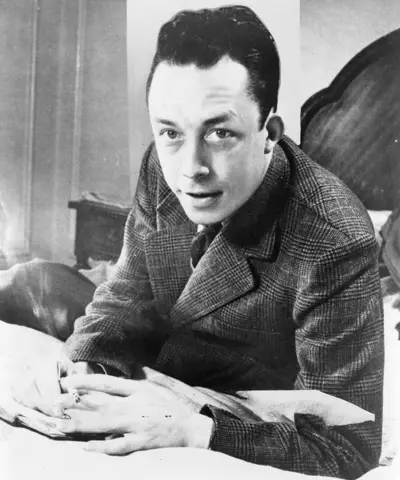
Albert Camus was a French philosopher, author, and journalist. He won the Nobel Prize in Literature at the age of 44 in 1957, the second-youngest recipient in history. His works include The Stranger, The Plague, The Myth of Sisyphus, The Fall, and The Rebel.
