Daisaku Ikeda Quotes
History is filled with tragic examples of wars that result from diplomatic impasse. Whether in our local communities or in international relations, the skillful use of our communicative capacities to negotiate and resolve differences is the first evidence of human wisdom.
Ikeda, Daisaku. For the Sake of Peace: Seven Paths to Global Harmony, A Buddhist Perspective. Middleway Press, 2001.


His appeal was also in the name of concurring heads of state of Finland, Holland, Denmark, Norway, Luxemburg, and Sweden.


This is an interesting historical quotation because it shows the role of the Queen in the English Government at the middle of the 19th century. What the quotation shows is that the drafts of significant foreign policies were sent to the young 29 year old Queen for approval. However, her review was not perfunctory, In {630732} it showed how she analyzed proposed policies and pointed out flaws and shortcomings. In this quotation she not only criticized a part of the draft policy but actually wrote her own copy to be included. War was then raging in Lombardy between the Austrians under Marshal Radetzky and the Piedmontese under the King of Sardinia and she believed the Palmerston draft did not do enough to make the Austrians see England as an objective party. And she wanted to be much more proactive and have the British Foreign Ministry mediate the conflict. This would be like a President of the United States taking a draft of a foreign policy from the State Department, instead of either approving or disapproving it, redrafts it to add some additional elements and make the language more comfortable for the parties. And she did this when by U. S. standards she was not old enough to even run for Congress. (And women in the United Kingdom could not even vote.) Note that the formality of the time required that the Queen refer to herself in the third person and not the first.


When there is a serious problem with another country and it appears that military force may have to be used, he and most sophisticated policy makers argue that we should always try diplomacy first. If that does not work, then the military option is still open. If it does work, war or other military action is always available as an option. When politicians do not want to try diplomacy, it is usually that they have an ulterior motive for war and/or military force. Some urge caution with this principle in all cases as sometimes it gives the enemy time to regroup and rearm and he gets stronger by stringing out the negotiations with no intention of a diplomatic solution. In some other cases, as Iran in the second decade of the 21st century when they were suspected of developing a nuclear weapon. The Israeli right wing and some American conservatives wanted no delay in use of military force as that might allow the Iranians to complete an operational message. President Obama and most Americans favored strong economic sanctions with diplomacy first.


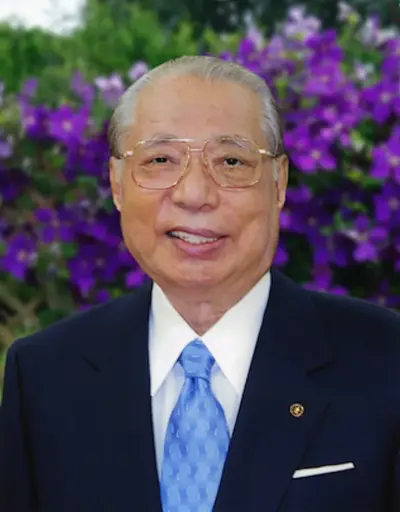
Daisaku Ikeda is a Japanese Buddhist philosopher, educator, author, and nuclear disarmament advocate. He has served as the third president and then honorary president of the Soka Gakkai, the largest of Japan's new religious movements. Ikeda is the founding president of the Soka Gakkai International (SGI), the world's largest Buddhist lay organization, which declares approximately 12 million practitioners in 192 countries and territories, of whom more than 1.5 million reside outside of Japan as of 2012.:269
