David Novak Quotes
Historically, Jews only accept converts rather than actively seeking them.
Novak, David. The Jewish Social Contract: An Essay in Political Theology. Princeton University Press, 2005.


The Torah, the first 5 Books of the Bible, are the statement of Jewish law. The Talmud is a compendium of commentary on Jewish Law—–reflecting the views of a number of learned Rabbis of old. In a sense, they are much like legal opinions from many different judges. They are disparate views and often contradict on another. Few if any other religions, have an official document like it. Other religions key documents are prescriptive, and where there are occasional contradictions , effort is made to rationalize. However Judaism has the strong religious tradition of dissent from singular dogma. Different Jewish sects and groups differ in what in the Talmud they follow, and Reform Jews, the largest group in America, assume a continuing discussion of the Talmud with the ancient Rabbis having no more weight in their opinions that modern thinkers—–theologians, philosophers, and others.

The Shas Party is an ultra-orthodox religious minor political party in Israel. Although the Israeli Supreme Court always voted to uphold the rights of the Orthodox Jews, it also protected the rights of Jews who were not orthodox and of non-Jews. This infuriated the Shas party who wanted their interpretation of traditional Jewish religious law to be imposed on all citizens of Israel. Reform Conversion is the right of a reformed Jewish Rabbi to perform a conversion to Judaism. Shas wanted only their orthodox rabbis to have that prerogative. Only a minority of Israeli citizens follow the Jewish Dietary Laws, and many Jews want to buy and eat pork. The Supreme Court upheld the right of a private store to sell pork products if it wished to, despite the distress of Shas and other fundamentalist Jews.
Saudi Arabian Newspaper. This and other absurd libels against Jews permeated a series of two articles she wrote in the newspaper. The lie that Jews use the blood of non-Jews to bake their holy bread has been a staple of anti-Semitic propaganda through the centuries. A few days thereafter, the editor of the newspaper, who had been away at the time of the publication himself published a rebuttal and repudiation. See Turki Abdullah al-Sudeiri: {593163}

His parents were assimilated Jews and he converted to Christianity.

The Kotel -- or the "Western Wall" or the "Wailing Wall" as most outside of Israel call it -- is the Holiest of Jewish places where many Jews gather and pray. But the Ultra-Orthodox Rabbis who were charged by the Israeli Government to manage the Wailing Wall and vicinity had refused to allow women to pray at the wall. After much litigation, the Israeli Supreme Court ruled that women had a right to pray there or anywhere else. After much foot-dragging, a small out of the way area at the wall was designated for women, but many Jews wanted to pray as a family which also offended those Rabbis in control of the area, After more Supreme Court Litigation the Government was ordered to establish an area at the Wall that was open to all. The Israeli Government Ministerial Committee for Holy Places was charged with implementing the Supreme Court rulings. However, Regev--who had ambitions of running for Prime Minister, was a conservative whose political base included the Ultra-Orthodox. When they objected to the Supreme Court Ruling, she resigned from the Commission she chaired rather than implement the law of the land. Her official view on the dire consequences of women (or mixed gender) praying at the Wall brought her the support of her base and the strong opposition of most Israeli women and many men as well.


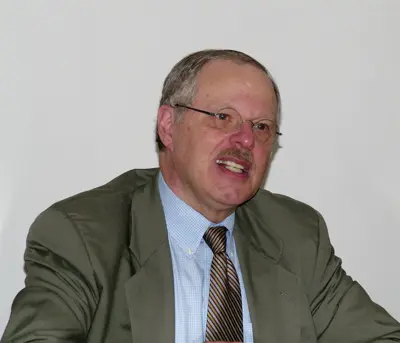
David Novak, FRSC is a Jewish theologian, ethicist, and scholar of Jewish philosophy and law (Halakha). He is an ordained Conservative rabbi and holds the J. Richard and Dorothy Shiff Chair of Jewish Studies as Professor of the Study of Religion and Professor of Philosophy at the University of Toronto since 1997. His areas of interest are Jewish theology, Jewish ethics and biomedical ethics, political theory (with a special emphasis on natural law), and Jewish-Christian relations.
