Charles Dickens Quotes
Her contempt for me was so strong, that it became infectious, and I caught it.
Dickens, Charles. Great Expectations. Vol. 1, Chapman and Hall, 1861, p. 119.


FDR was hated by conservatives to a degree that no President in modern history was or would be until Bill Clinton served in that role. Both men were amazingly successful with their programs and administration of the government.


Referring to John Foster Dulles:


Expressing his feeling regarding President Grover Cleveland who failed to deal with serious economic problems:
Kennedy (the father of JFK) was U.S. Ambassador of Britain at a critical time in history—the rise of Nazism. To Roosevelt and most other’s surprise, Kennedy turned out to be a Nazi sympathizer. He was complimentary towards Hitler and Mussolini, an advocate for fascism. He had been a producer of films and he tried to pressure American film-makers not to make films depicting Hitler and Nazi Germany in a less than favorable light. He supported Charles Lindbergh and American Fascists and conspired with the English upper class supporters of Hitler and Fascism. He had publicly and privately argued against Lend Lease and military aid to England. Roosevelt, an incredibly persuasive leader, had invited him to Hyde Park to straighten out what he thought was a misunderstanding. The two men were in a room alone for 10 minutes when Roosevelt sought his wife and made the statement. Kennedy of course resigned. FDR never spoke to him again.

They never met. Harrison lost to Barkley by a single vote. Harrison’s fellow Senator from Mississippi was Theodore Bilbo, 1877-1947, a notorious racist and demagogue and Harrison would have nothing to do with Bilbo. However, in 1937 Harrison was a candidate for the Senate Majority Leader and appeared tied with Alben Barkley. Bilbo sent word to Harrison that if he would meet with him, Bilbo would vote for Harrison.

See {634908} for an interaction between the two men that shaped FDR’s opinion. Roosevelt, when President very much sided with Winston Churchill in disapproval of Chamberlain’s appeasement of Hitler at Munich at the beginning of WWII. Morganthau became FDR’s choice for Treasury Secretary when he became President.


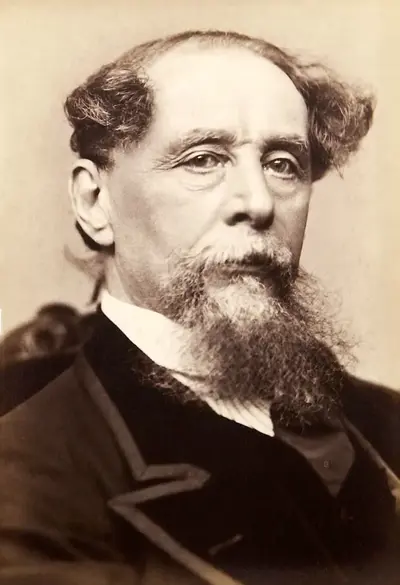
Charles John Huffam Dickens FRSA was an English writer and social critic. He created some of the world's best-known fictional characters and is regarded by many as the greatest novelist of the Victorian era. His works enjoyed unprecedented popularity during his lifetime and, by the 20th century, critics and scholars had recognised him as a literary genius. His novels and short stories are widely read today.
