Pearl S. Buck Quotes
He will be an extraordinary person, that pure American, who will be standing in my place five thousand years from today. He will have what no other human being has had in just the same richness, the inheritance of all ages, all races, all cultures…. a true superman, standing on the shoulders of those from all nations and races of the earth.
Pearl S. Buck, 1892-1973, Nobel Laureate in Literature Quoted in Eleanor Roosevelt, My Day, July 27, 1937
Sourced by: Eigen's Political and Historical Quotations


Millard and other racists ignorant of the human genome and science do not even realize that the thing they fear has already occurred tens of thousands of years ago. All humans, Blacks, Whites, Indians, Asians whatever all people alive today share the genes of Lucy, the oldest human discovered—she was Black and all other races as well as Blacks are descended from her and her contemporaries.

The population was an amalgam of Spaniards, Englishmen and other Europeans, Blacks originally brought over as slaves from Africa, and indigenous people from many different tribes.


Although a blue-blood aristocrat himself, he felt that immigration to America of people throughout the world was one of the critical factors of American greatness.

At the time racism and discrimination in the United States was not only rampant but legal. But change in many substrata of America was detectable and many intellectuals--writers, artists, scientists, educators, theologians, entertainers, groups who would later be called “elites” began to make themselves heard on the subject. Falkner was one whose novels had always taken an anti racist view point and now were overtly calling for political and social change.


At the time, this was a very political speech. Racism was rife in Germany and was being introduced into Italy by the Fascist government. Xenophobia was prevalent throughout Europe as WWI hatreds had been inflamed by the politicians. Bohr’s speech was considered a major attack on Fascism.

Man will put foward a goal to raise himself to a new level to create a higher sicio-biological type.
He was one of the very early thinkers who realized that one of the major implications of Evololution was that man would likely try to manipulate the many variables taht could effect evolution to forther develop ouyr species. It took until the end of the 20th centrury before man actually tried to do this.


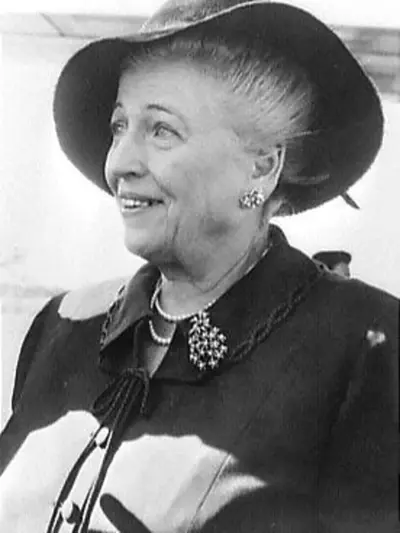
Pearl Sydenstricker Buck also known by her Chinese name Sai Zhenzhu (Chinese: 赛珍珠) was an American writer and novelist. As the daughter of missionaries, Buck spent most of her life before 1934 in Zhenjiang, China. Her novel The Good Earth was the best-selling fiction book in the United States in 1931 and 1932 and won the Pulitzer Prize in 1932. In 1938, she was awarded the Nobel Prize in Literature "for her rich and truly epic descriptions of peasant life in China and for her biographical masterpieces". She was the first American woman to win the Nobel Prize in Literature.
