Thomas Fuller Quotes
He whose belly is full believes not him whose is empty.
Thomas Fuller, 1654-1734, English Physician & Writer, Gnomologia, 1732
Sourced by: Eigen's Political and Historical Quotations


The bell refers to the hand bell that was used at the time by the wealthy to summon servants for food or any other errand.


This quotation is one of the great metaphorical statements of social and political oratory. Then, and even today, most people who discuss the wealthy and their callousness towards the poor are accused of class warfare. Here Debs profoundly attacked the rich and their inaction in society without ever mentioning the wealthy in any way. There was no way of labeling this as an attack on anyone or class warfare.


As the son of a former president he fought in both WWI and WWII and was awarded the Congressional Medal of Honor. See {593105} for another quotation on the poverty of Puerto Rico.


Millions of people were hungry. There was not enough wheat (they called it corn) to make up for the failed potatoes, and the aristocracy, the landlords, had a very high protective tariff to prevent American wheat from driving the prices down. The aristocrats would not budge on the “corn laws” so Victoria and her government appropriated funds to buy expensive English wheat to distribute to the needy. She also instituted some public employment so the unemployed would, as in the New Deal later, would work on public improvement. However, all administration went through the landlords who took large portions of the corn for the poor to pay themselves for the cost of distributing the corn to the needy. Then many landlords assigned the publicly paid workers to improvement projects on their own personal land. The Queen and Prince were furious and they began an effort that would repeal the Corn Laws and make England a free trading nation.


The crisis of inequality of income and wealth has occurred seven times in American history.

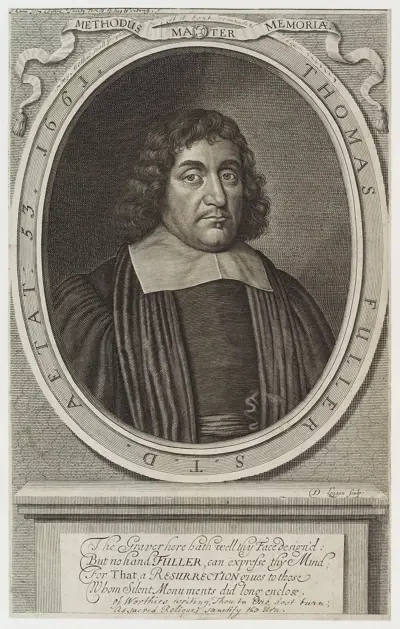
Thomas Fuller was an English churchman and historian. He is now remembered for his writings, particularly his Worthies of England, published in 1662, after his death. He was a prolific author, and one of the first English writers able to live by his pen (and his many patrons).
