Adlai Stevenson II Quotes
He who slings mud generally loses ground.
Stevenson, Adlai E. Major Campaign Speeches of Adlai E. Stevenson, 1952. Random House, 1953.


Calumnaire fortiter, et aliquid adhaerebit. See Pierre Beaumarchais for a later version of this political tactic.

In 1934 writer Upton Sinclair won the California Democratic gubernatorial nomination. The Republicans spent three times the funds that they had committed against Roosevelt in the 1932 presidential election to defeat Sinclair. In particular, they used the first "media consultants" in American political campaigns to comb through all of Sinclair's novels finding dialogue of the villains which were then ascribed to Sinclair in a series of cartoons distributed throughout the state:


A critical difference between English and American law is that truth is an absolute defense in the U. S. but is not in Great Britain. In the case of public figures, "the great," even truth is not required in U. S. law. It is not against American law to slander public figures as long as it is not malicious.

A few weeks before his election his opponent accused him of sexually molesting a woman two decades earlier.


There have been few modern politicians who would be so firm against negative campaigning by members of his own party. In reality, although Roosevelt was very popular amongst the people, he was never a favorite of the party politicians. For example, see {585078}.
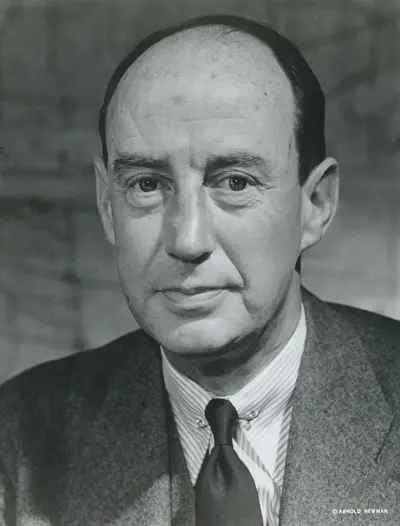
Adlai Ewing Stevenson II was an American lawyer, politician, and diplomat. Raised in Bloomington, Illinois, Stevenson was a member of the Democratic Party. He served in numerous positions in the federal government during the 1930s and 1940s, including the Agricultural Adjustment Administration, Federal Alcohol Administration, Department of the Navy, and the State Department. In 1945, he served on the committee that created the United Nations, and he was a member of the initial U.S. delegations to the UN. He was the 31st governor of Illinois from 1949 to 1953, and he won the Democratic Party's nomination for president in the 1952 and 1956 presidential elections.
