George Herbert Quotes
He that hath lost his credit is dead to the world.
Herbert, George. Jacula Prudentum. W. Du-gard, 1651.


This dictum has driven blood feuds that have lasted over 200 years. It has also made governance and diplomacy in Northern Albania very difficult.


This text, generally considered the most important of all the Hindu works is believed to be the guidance given by Lord Krishna, the most important of the God figures, to has friend and devotee Arjuna. It originally was an episode of the enormous Mahabharata, the history of the ancient world written originally in Sanskrit. The date is approximate and different scholars have dated it from 500 BC to 50 BC. The Bhagavad Gita is generally regarded as the most concise description of Hindu philosophy. For Christians this notion is not a general one although it has evolved very strongly outside of religion in some subcultures such as Spain. But for Islam and the Hindu religion this notion is an integral component of the religious philosophy.

Amazingly the newspaper castigated Cunningham for making obscene gestures and saying “Fuck You” to constituents who would tell the Congressman that there was too much Defense spending. The reason this was amazing is that the San Diego Union supported Cunningham every single time he ran for election and never wrote a word about his illegally swinging contracts to firms. He had been taking bribes all along and when the Federal judge sentenced him to jail called him the ‘most corrupt congressman in American History.’


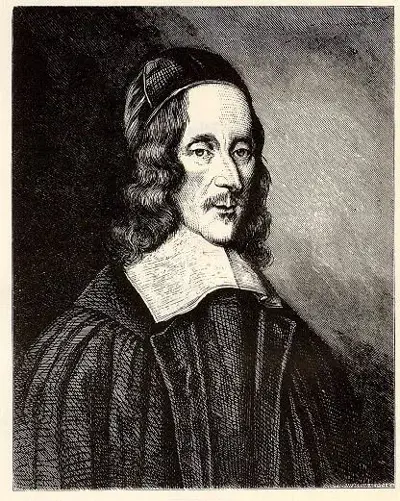
George Herbert was a Welsh-born poet, orator, and priest of the Church of England. His poetry is associated with the writings of the metaphysical poets, and he is recognised as "one of the foremost British devotional lyricists." He was born into an artistic and wealthy family and largely raised in England. He received a good education that led to his admission to Trinity College, Cambridge, in 1609. He went there with the intention of becoming a priest, but he became the University's Public Orator and attracted the attention of King James I. He served in the Parliament of England in 1624 and briefly in 1625.
