Bernard Baruch Quotes
He [President Warren G. Harding] is a kind, companionable fellow to go with on a fishing expedition or to play cards with; but he is not the man to have as President or leader.
Bernard Baruch, 1870-1965, Businessman & Chairman, War Industries Board, U. S. Delegate to U.N. Atomic Energy Commission, Statement to Mark Sullivan
Sourced by: Eigen's Political and Historical Quotations


4 years later Roosevelt was so disgusted with Taft that he ran against him in the Republican Primary and the General Election where he polled more votes than Taft but they both lost to Woodrow Wilson when the Republican vote was split.


Reagan, Ford, Bush, Clinton


President-elect Harding had sounded out Herbert Hoover's interest in becoming Secretary of Commerce. At the time, the Commerce Department was of relatively little importance, housing only a few scientific bureaus. Hoover placed conditions upon his acceptance whereby the department, and he, would be given much more authority and funding. Word of the negotiations leaked and Hoover was asked if he was placing conditions upon the President:


He was very critical of Arraham Lincoln even though he was a Republican. Many percieved that Lincoln's administration could not get anything done. Lincoln might have lost the 1864 campaign but for the great victory that General Sherman's troops had in taking Atlanta. This changed a lot of mionds about Lincoln's War strategy. Actually, in the first 2 years of the Civil War, Lincoln could not get his generals to fight his preferred kind of war until he appointed Grant who brought Sherman to high command.


on the decision of whether to use military force against the Assad Syrian regime for their using chemical warfare against their own people


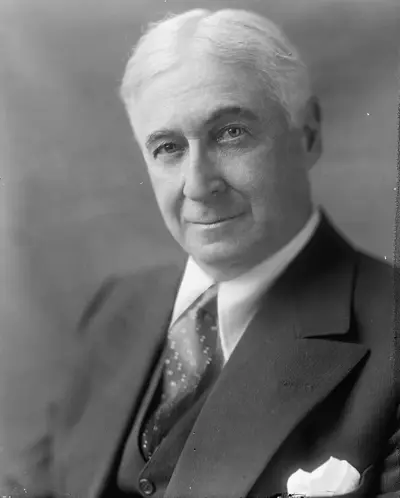
After amassing a fortune on the New York Stock Exchange, he impressed President Woodrow Wilson by managing the nation's economic mobilization in World War I as chairman of the War Industries Board. He advised Wilson during the Paris Peace Conference. He made another fortune in the postwar bull market, but foresaw the Wall Street crash and sold out well in advance. In World War II, he became a close advisor to President Roosevelt on the role of industry in war supply, and he was credited with greatly shortening the production time for tanks and aircraft. Later he helped to develop rehabilitation programs for injured servicemen. In 1946, he was the United States representative to the United Nations Atomic Energy Commission, though his Baruch Plan for international control of atomic energy was rejected by the Soviet Union.
