Samuel Seabury Quotes
He has demonstrated his incompetence to hold the said office of Sheriff, by reason of his ignorance of the duties of his office and the laws of this State pertaining to the same, and by reason of the appointment to and retention in office under him of incompetent and unworthy persons; that he has sworn falsely under oath at public hearings before the Joint Legislative Committee; that he has failed to account for or to explain the receipt and possession of large sums of money in excess of his salary as a public officer or income received from any admitted occupation or from investments, upon all of which grounds and by reason of any and all the charges hereinabove enumerated, it is respect fully submitted that said Thomas M. Farley should cease to be an incumbent of the office of Sheriff of New York County.
This was one of the many cases of blatant corruption Seabury found in New York that were politically connected with Tammany Hall. Farley was not only the Sheriff of New York, but was also the head of the Tammany Hall political machine. Governor Roosevelt removed him from his position as Sheriff, but did not have the legal authority to purge him from Tammany Hall where Farley stayed as leader, but organized a round of testimonial dinners where he was the “guest of honor” that was paid for and attended by most New York businessmen and politicians. It was however, the beginning of the end of Tammany Hall as the voters finally ousted the Tammany Hall mayor and overall reform followed.
Samuel Seabury, 1873-1958, Judge of the NY State Court of Appeals, Chair of the Governor’s Corruption Investigation, Report to NY Governor Franklin Delano Roosevelt, 1932
Sourced by: Eigen's Political and Historical Quotations

See {626681} for the trigger of this comment.


This appears to be the earliest use of the phrase which was “borrowed” by the founding fathers in the writing of the U. S. Constitution.


Before there was a separation of powers, the term “magistrate” referred to public officials who had the executive and judicial powers as well as some legislative authority. The term “Chief Magistrate” applied to the President of the United States is somewhat of a throwback to this older term and concept. In 17th century Ireland, magistrates were the chief authorities of each subarea, and corruption was rampant. To this day, the invitation to corruption and lack of long term interest in governance is given to support long terms of office and to oppose term limits.


Roosevelt was responding to proposals that the Governor have the power to remove state and local officials for corrupt acts earlier in their career. With a number of big city political machines nominating and electing officials who had previously been convicted of corruption, there was a movement to give this authority to the Governor. In Boston, Mayor Curley was elected while he was in jail serving time for Corruption as an example. Still for FDR and many others, that was the prerogative of the electorate, and must not be usurped by a governor. In states where corruption was totally rampant, like Texas, the reformers passed laws making convicted criminals ineligible to serve in public office.


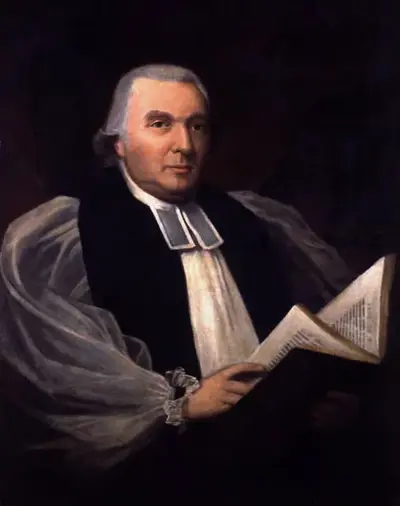
- Born: November 30, 1729
- Died: February 25, 1796
- Nationality: American
- Profession:
Samuel Seabury was the first American Episcopal bishop, the second Presiding Bishop of the Episcopal Church in the United States of America, and the first Bishop of Connecticut. He was a leading Loyalist in New York City during the American Revolution, a known rival of Alexander Hamilton, and a slaveholder.
