Thomas Babington Macaulay Quotes
He had done that which could never be forgiven; he was in the grasp of one who never forgave.
Macaulay, Thomas Babington. The History of England from the Accession of James the Second, vol. 1, Longman, Brown, Green, and Longmans, 1849, p. 617.


Jorge Mario Bergoglio

6th Baron Byron. This is one of the more eloquent descriptions of the long historical memory which keeps alive the thirst for vengeance. The Irish revolutionist, James Connolly, 1868-1916, quoted these lines in one of his great polemics, Queen Victoria’s Diamond Jubilee, 1897

This proverb only makes sense in the light of understanding the Arab concept of revenge—“blood.” In a rural desert environment where little can be expected of government, the Arabs have developed a law enforcement and peace keeping mechanism which while primitive from modern standards, nevertheless worked to some degree. It is that revenge—“blood” is a moral necessity and obligation of all people, and revenge is not limited by time or to the individuals involved in the first incidence. The immediate family are the first to exact revenge, but the extended family follows and often the entire clan. Sometimes revenge is tribal or even national. Anyone who fails to revenge a member in his group is not only a disgrace, but is a clear and present danger to the group because then they can be attacked with impunity. So revenge is a strong obligation of the group members and blood must be paid with blood no matter how many generations it may take. The only thing that keeps me and my family safe, is the surety what whosoever kills one of us will themselves be killed or if they die a natural death we will take revenge on one of the evildoers relatives and no one is exempt. Crime must never pay!


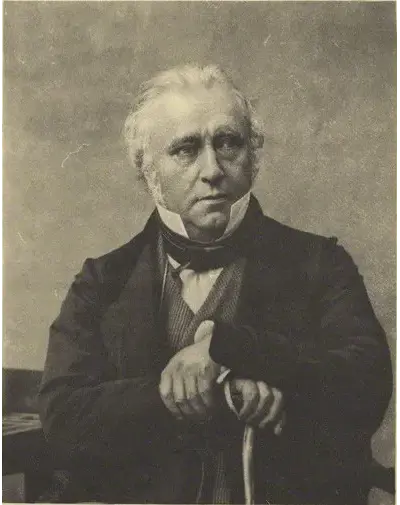
Thomas Babington Macaulay, 1st Baron Macaulay, FRS FRSE PC was a British historian and Whig politician. He wrote extensively as an essayist, on contemporary and historical sociopolitical subjects, and as a reviewer. His The History of England was a seminal and paradigmatic example of Whig historiography, and its literary style has remained an object of praise since its publication, including subsequent to the widespread condemnation of its historical contentions which became popular in the 20th century.
