Alfred Thayer Mahan Quotes
Having therefore no foreign establishments, either colonial or military, the ships of war of the United States, in war, will be like land birds, unable to fly far from their own shores. To provide resting places for them, where they can coal and repair, would be one of the first duties of a government proposing to itself the development of the power of the nation at sea.
Mahan, Alfred Thayer. The Influence of Sea Power Upon History, 1660-1783. Little, Brown, and Company, 1890, p. 83.


There were few military thinkers at that time who would agree with Goebbels on this point.


Germany had a very small and insignificant navy. It was Tirpitz who persuaded the nation to develop sea power.

Most Americans do not realize that our naval forces were disbanded after the Revolution and even the Constitution did not require a navy. We had some Federal revenue cutters to interdict smugglers but no warships and no permanent sailors or officers. The Barbary Pirates had an incredible extortion racket going in the Mediterranean. If nations would pay them an annual sum each year, they would not attack and seize merchant ships of that country and sell the ships and goods while holding the sailors for ransom. See {640850},86703,{640846} & {640848}

In the first year of WWI, the British Fleet kept the German Fleet bottled up in port. As a result, the British had a very successful sea embargo against the Germans who rarely challenged the British fleet even though they had some major, powerful, capital ships. See {642234}. Meanwhile, the German ships were in no position to harass much less destroy Allied (French, Russian or English) shipping.


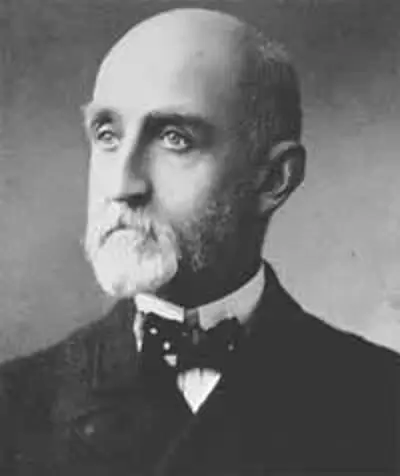
Alfred Thayer Mahan was a United States naval officer and historian, whom John Keegan called "the most important American strategist of the nineteenth century." His book The Influence of Sea Power Upon History, 1660–1783 (1890) won immediate recognition, especially in Europe, and with its successor, The Influence of Sea Power Upon the French Revolution and Empire, 1793–1812 (1892), made him world-famous and perhaps the most influential American author of the nineteenth century.
