John Perkins Quotes
Had Roosevelt been caught, we would have been in a lot of trouble. It would have been very embarrassing.
Perkins, John. Interview with Amy Goodman. Democracy Now!, 9 Nov. 2004, www.democracynow.org/2004/11/9/confessions_of_an_economic_hit_man.


Nixon’s remark {583773} had been suppressed by the Nixon family and McGovern and the world first heard it 40 years after the fact.

Nixon’s brother Donald Nixon was a notoriously poor businessman and was in financial difficulties. The Vice President asked the Howard Hughes attorney if a loan could be arranged for brother Donald. Nixon told Dietrich that “My family comes ahead of my political career.” The $25,000 loan was arranged and “laundered” by coming from Frank Waters, a Hughes attorney to Nixon’s mother who in turn gave the money to Donald. He promptly spent it all and 2 weeks later Don’s business went under. No quid pro quo has ever been proved, although see Howard Hughes’ quotation.


The English were at War with Napoleon and Denmark was neutral. British leaders feared that Denmark might either ally themselves with Napoleon or provide him with ships from their well equipped fleet. The English decided on a preemptive attack on Denmark and Napier and other officers were ordered to Denmark. When they arrived, they were ordered to bombard Copenhagen and force the Danes to surrender. When this happened, the British seized the Danish ships and simply took them as war prizes. The issues of the morality and wisdom of preemptive attacks, as with the Americans in the Iraq war, was thoroughly debated but the government view prevailed to the shame of most Englishmen.

Turley was a strong supporter of the nomination of John Ashcroft as George W. Bush’s Attorney General in 2000. However, after Ashcroft was confirmed and in office, he came up with a plan for government detention (concentration) camps where he claimed the authority to hold suspects indefinitely without charges or trial. Turley withdrew his support and endorsement, and became one of Ashcroft’s major critics.


Lindbergh, a great aviator, was a Fascist who was a great admirer and supporter of Hitler and Mussolini. By this time, even Lindbergh had seen much of the German aggression, and his opposition to the war was on the pragmatic ground that we could not win. He thought that democracy was too unsuited to a country being a major power.

When Nixon was running for President in the 1968 Presidential campaign, he learned from Henry Kissinger that the Johnson administration had made an agreement with the Russians and North Vietnamese that America would stop the bombing of North Vietnam if there would be Peace Talks to end the Vietnam War. Nixon feard that although the polls showed him ahead of Vice President Humphrey, the announcement of ongoing peace talks would bring many of the anti-war Democrats who were not supporting Humphrey because of the Vietnam War out to vote for Humphrey to support the Peace Talks. Nixon decided to sabatouge the Peace Talks by persuading Vietnamese President Nguyen Van Thieu not to come to the peace table so there coulod be no talks. He accomplished this by having Anna Chennault, an extreme right-wing fund raiser who was the widow of General Chennault of Glying tiger fame and who had connections with all the right wing politicans in Asia, get word to President Thieu that President Johnson would sell him out in the peace upcomming peace talks, and that if he would boycott the peace talks till after the American Presidential election, Nixon as the New President would be sure that Thieu would remain in control of South Vietnam or there would be no peace and America would continue the war until the North Vienamese would agree to a peace that kept Thieu in power. Earlier, Nixon had appointed Anna Chennault as the Offical Spokesperson of the Campaign on Asia. What Nixon did was a felony--private citizens are not alowed to intere with government negotiatons or discussions with foreign governments under the Logan Act. Many think that the action was legally Treason. Hoever, Nguyen VanThieu did boycott the peace talks despite all the entreaties of President Johnson and his administration. There were no peace talks and the public never even knew that there had been this attempt. The anti-Vietnam War voters mostly did not vote and Nixon won a close race. Shortly after the election, before Nixon could be sworn in, via the FBI, Johnson learned of Chennault's activities but thee was no evidence to tie Nixon to the South Vietnam refusal to come to the peace table. It never became a public issue although several leading politicians had learned what had really occured--see Quotation 664238. However, 0ver 40 years later, when Nizon's Chief of Staff's notes were finally made public, the smoking gun was dislosed and Farrell wrote this in his 2017 Biography of Richard Nixon. See Related Quotes for quotations from H. R. Haldman's hadnwritten notes of his phone call with Nixon, and other evidence that had also been uncovered.


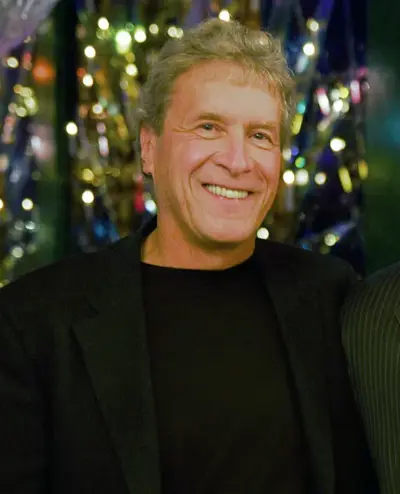
John Perkins is an American author. His best known book is Confessions of an Economic Hit Man (2004), in which Perkins claims to have played a role in an alleged process of economic colonization of Third World countries on behalf of what he portrays as a cabal of corporations, banks, and the United States government. The book's claims were met with skepticism and rebuttal, but spent more than 70 weeks on the New York Times bestseller list, has been published in at least 32 languages, and is used in many college and university programs.
