Edward Abbey Quotes
Growth for the sake of growth is the ideology of the cancer cell.
Edward Abbey, 1927-1989, Philosopher, Environmentalist and United States Park Ranger, Quoted in Creative Quotations
Sourced by: Eigen's Political and Historical Quotations


Over a decade later a leading English politician realized the same possibility and took steps to prevent it {636871}. Brazil was a colony of Portugal which grew at so fast a comparative rate, that Brazil became many times the size of the original mother country.


This quotation is important as it provides a major counter-example to the ideological political belief that tax cuts and deregulation produce economic growth. Sometimes they do, but other times they do not. Ironically the greatest periods of growth in the last half of the 20th century included some of the highest rates of taxes. At other times high taxes curtailed growth. As with many political ideologies, they are really not principles or laws of nature or economics, but political preferences.


Burke was one of the few in England who predicted economic and commercial success of America.

This quotation was very important because the most important economic principle of Republican ideology since the 1960s has been that tax cuts will produce economic growth and the converse: that tax increases will stifle economic growth. For 50 years the Republican nostrum for all economic problems has been to increase growth by cutting taxes and opposing all tax increases. However Leonhardt studied the data and results since 1987 and found that the Republican doctrine had been wrong. Economic growth plummeted when we had the largest tax cuts in the George W. Bush years and the greatest growth spurts were following the 1990 George W. Bush tax increase and the 1993 Bill Clinton tax cuts. When the data became public some Republicans took the view that taxes were just one of the factors determining economic growth and have been overwhelmed by other factors. Some Democrats argue that if this were really believed by Republicans, they would have favored these other factors more so than tax cuts when in fact tax cuts are always their nostrum.


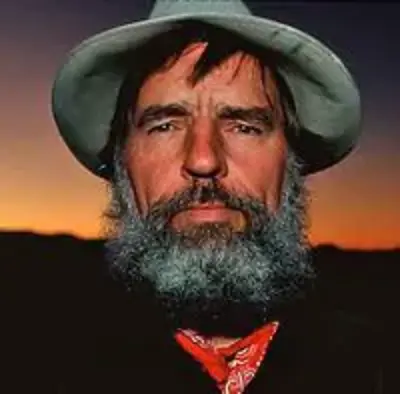
Edward Paul Abbey was an American author and essayist noted for his advocacy of environmental issues and criticism of public land policies. His best-known works include Desert Solitaire, a non-fiction autobiographical account of his time as a park ranger at Arches National Park considered to be an iconic work of nature writing and a staple of early environmentalist writing; the novel The Monkey Wrench Gang, which has been cited as an inspiration by environmentalists and groups defending nature by various means, also called eco-warriors; his novel Hayduke Lives; and his essay collections Down the River (with Henry Thoreau & Other Friends) (1982) and One Life at a Time, Please (1988).
