Ahmed Zewail Quotes
Growing up in Egypt, I never saw the country as divided as it is today. We now have two main political groupings: the Islamist parties and the civil, or liberal, political parties.
Zewail, Ahmed. Reflections on World Affairs: Peace and Politics. Imperial College Press, 2015.


In the 2016 Presidential Elections, there were a few close states. However, in most states one of the candidates won by a signficiant margin proucung some states that supported Trump and some who opposed Trump--hence "Divided States of America".


Despite his fears, that is exactly what happened. Ironically, he himself was the focus of much dissatisfaction with the administration, and the Federalists led by Adams and the Democratic Republicans led by Jefferson opposed each other, ousting Adams.


He was providing historical perspective to the 2016 Republican Party split in which nativism and anti-immigration was a major factor.

In the Early 21st Century, the vast majority of the entertainment industry were supporters of the Democratic party. This has generally been true throughout history where entertainers have been on the left politically except in left leaning dictatorships like China and the Soviet Union where those governments tend to see entertainers as reactionaries. In general entertainers talk, sing, and dramatize about and criticize the status quo.


From the latter part of the 20th century onward, religious nationalism was no longer a force for most religions and nations except Muslim countries. It was the only religion left where a large proportion of the adherents saw no distinction between the religion and the government. Nations that had separation of church and state were not conducive to the extreme fundamentalist form of Islam where the Secular Leader and the Religious leader was to be embodied as a single person. As a result Islamic religious nationalists argued for a Theocracy and at times fought for it with violent means. The secular government typically, to curtail the violence and prevent a religious takeover, often outlawed the extreme religious Islamic parties. While Aslan cites the Muslim Brotherhood failure in Egypt as a desirable outcome, the only way the other forces of Egyptian society could prevent the Islamists from taking over turning the country into a theocracy was to forcefully repress the extremists. The Turkish outcome was much better, but there was the threat of repression of the Justice and Development Party when it won a majority control of the government. There were explicit threats that if it tried to weaken the secular nature of the government as Ataturk had formulated it, the military would come “out of the barracks” and oust the government as they had done before. There were nations like China which persecuted religions such as certain forms of Christianity, but those religions were not fighting for religious nationalism. They only wished the freedom to practice their religion and had no program or theology that argued for Christianizing the government. The Tamil Hindus of Sri Lanka did not want a Hindu government and were perfectly free to practice their religion. The problem was that they felt that there was systemic social and economic discrimination against the Tamils and they fought for independence—not of a Hindu state, but of a secular, nondiscriminatory state of equal opportunity.

This was a new political phenomenon where a President was perceived as more important, more powerful, and preferable to his party. Note that the base of the scale is labeled “Public Opinion”.


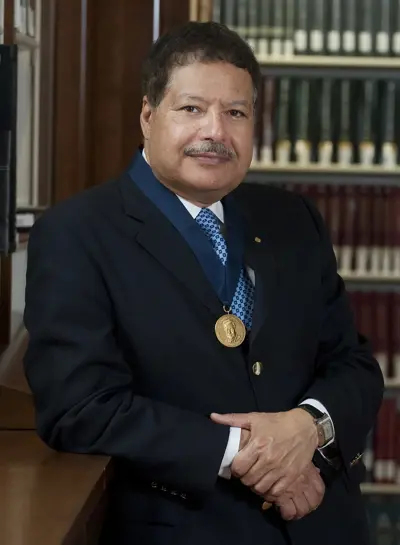
Ahmed Hassan Zewail was an Egyptian-American chemist, known as the "father of femtochemistry". He was awarded the 1999 Nobel Prize in Chemistry for his work on femtochemistry and became the first Egyptian to win a Nobel Prize in a scientific field. He was the Linus Pauling Chair Professor of Chemistry, Professor of Physics, and the director of the Physical Biology Center for Ultrafast Science and Technology at the California Institute of Technology.
