Mark Twain Quotes
God made all the animals in a single day; he could have swept them all away in the flood and re-created them in one day when they were again needed. Therefore it was an odd idea to save specimens of them for eleven months in the ark, whilst aware that eight persons could not feed or water them by any human possibility. If they were to be preserved by miracle, the ark was not necessary - to let them swim would have answered the purpose and been more indubitably miraculous.
Twain, Mark. Letters from the Earth. Harper & Row, 1962.


There are many scientists who disagree with Johnson’s very unusual logic. They point out that it is certainly possible that God initially did not have had humans in minds, and when they evolved, decided that they were worthy of salvation history and then interfered to the extent of a virgin birth. Others would point out that just because man cannot exactly foresee the exact future pattern of evolution, does not men that a Supreme Being could not have initiated the mechanism that he/she knew would result in salvation history. The Pope and the Catholic Church see no inconsistency between Darwinism and the salvation history. Then there are those non-Christians who do not believe that God ever did introduce salvation and there are many more of them than there are Christians. Then, it is possible that God just set things in motion and had more important things then micromanaging evolution on our one planet in a universe of billions of billions. Last there are those who do not believe that there is or has been a God. Of course there is the possibility that Johnson is right, and religiously he may be, but that is not subject to scientific analysis.

This quotation illustrates the broad intellectual interests of Alfonso which was very rare for rulers and aristocrats of the day.


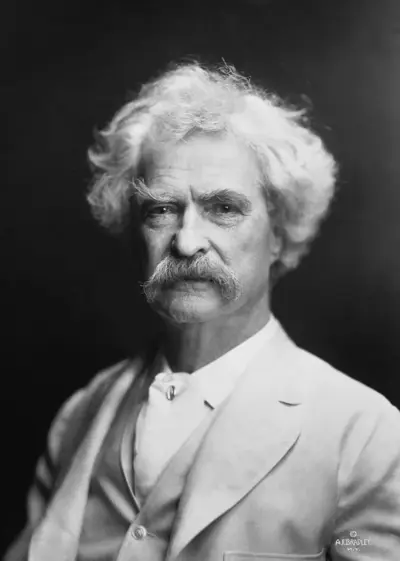
Samuel Langhorne Clemens, known by his pen name Mark Twain, was an American writer, humorist, entrepreneur, publisher, and lecturer. He was lauded as the "greatest humorist the United States has produced," and William Faulkner called him "the father of American literature". His novels include The Adventures of Tom Sawyer (1876) and its sequel, the Adventures of Huckleberry Finn (1884), the latter often called "The Great American Novel".
