Benito Mussolini Quotes
Given that the nineteenth century was the century of Socialism, of Liberalism, and of Democracy, it does not necessarily follow that the twentieth century must also be a century of Socialism, Liberalism and Democracy: political doctrines pass, but humanity remains, and it may rather be expected that this will be a century of authority ... a century of Fascism. For if the nineteenth century was a century of individualism it may be expected that this will be the century of collectivism and hence the century of the State.
Mussolini, Benito. The Doctrine of Fascism. Translated by Jane Soames, Hogarth Press, 1933.

“Liberals” and “liberalism” have very different meanings in Europe and pre-WWII America than contemporary America where “liberal” has been associated with a particular left wing view of democracy where it used to represent democracy where the individual has rights, not to be denied by the state---in opposition to monarchy, despotism and dictatorships.


In a sense, the European Parliament, was what Adler wanted for the democratic nations of the world.


Socialism in its then pure form had the state owning and controlling all the major assets of the nation. In this sense it was contradictory to individual freedom and hence democracy. However, in the years after Tocqueville’s quotation and the industrial revolution, socialism has gradually moved away from state ownership and operations of all institutions and resources. Democracy has tended to adopt a more regulatory view to control the excesses of unbridled capitalism. The range of democratic nations by the 21st century encompassed differences but some were described as “social democracies” and had some state ownership but were basically capitalistic economies. Even the self-described Communist nations had become heavily capitalistic albeit with less political freedom. At the same time, even the United States—the epitome of 21st century capitalism, owned and controlled a few of the resources and means of production and tended to regulate the others—a substantial difference from the American democracy which Tocqueville studied.

1st Viscount Snowden. This quotation is particularly interesting in that we have an early 20th century socialist acknowledging that one of the objectives of Socialism is to increase the individual’s dependency on the state. By the late 19th century, few socialists if any saw this as an objective of socialism. However, this dependency objective is one of the attack points of conservatives who assume that this is a result of socialism whether or not it was intended.

Most Americans do not realize that for most of Amrcan history there has been open borders with little or no restrcition on immigration. These that there were tend to be rembered becuse of the populism, nativism and unrest taht went with them.

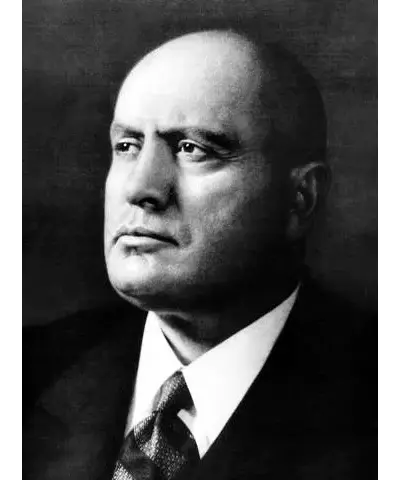
Benito Amilcare Andrea Mussolini was an Italian politician and journalist who founded and led the National Fascist Party. He was Prime Minister of Italy from the Fascist coup d'état in 1922 until his deposition in 1943, and Duce ("Leader") of Italian Fascism from the establishment of the Italian Fasces of Combat in 1919 until his execution in 1945 during the Italian Civil War. As dictator of Italy and founder of the fascist movement, Mussolini inspired other far right rulers such as Adolf Hitler, Francisco Franco, and António de Oliveira Salazar.
