Frederick William IV Quotes
Germany is in ferment within, and exposed from without to danger from more than one side. Deliverance from this danger can come only from the most intimate union of the German princes and people under a single leadership. I have taken this leadership upon me for the hour of peril. I have today assumed the old German colors, and placed myself under the venerable banner of the German Empire. Prussia henceforth is merged in Germany
Frederick William IV, 1895-1961, King of Prussia, March 21, 1847
Sourced by: Eigen's Political and Historical Quotations


Kennedy had gone to West Berlin in the midst of the Cold War and the worst of the Berlin Wall. This quotation was a great example of symbolism in politics. His presence. his delivery of the line in German, the statement identified him personally and the United States with the Berliners who were surrounded by Russian dominated East Germany, endeared him to Berliners, Germans, Europeans and freedom loving people the world over even though he stated no policies, goals, or programs. His identification said it all.


When the Nazis took over the German government, Schrodinger, a world famous scientist, at one of his major scientific lectures, gave an analogy that was critical of Hitler and the Nazis. The crowd of scientists wildly applauded. The Nazi agents took note of the speech. In 1938 Hitler had solidified his hold on Germany, Schrodinger was threatened with loss of his academic position and possibly a concentration camp. Since the scientist was so world famous, the Nazis persuaded him to issue a public statement of loyalty of which this quotation was part. It was published in all the German newspapers and scientific journals. Later, in the midst of WWII, Schrodinger was fired anyway on the grounds of “political unreliability”. See {629746} for Schrodinger’s letter of apology to his colleague Albert Einstein for his weakness in issuing the original apology.

In 1848 a number of revolutions flared throughout Europe with a call for democracy rather than monarchy. The Prussian king was one of those who really believed that he was selected by God to rule, was very frightened and tried to enlist the Queen and England to present a united front against the revolutionaries. England, which had already had a strong functioning parliament and extensive voting suffrage, protected most of the rights of its citizens and was a Constitutional Monarchy where there were limits to the power of the monarch. Further, Victoria was extremely popular and in many ways was far ahead of the electorate in terms of modern democratic reforms. So she was not in the panic of many of the other crowned heads of Europe were in. Somewhat following the example of England, King William IV allowed a parliament and minimized the strong military role that characterized Prussia. Most of the 1848 revolutions failed to sieze governments but, as with Prussia, forced reforms in what was a long movement to European democracy that would take another 150 years. Note also the logic about religion. Since the revolutionists did not believe in the divine right of kings, they opposed God’s will on earth. Therefore, they opposed God and must be atheists. Almost all counter revolutionary accusations included the claim—often not true—that the revolutionaries were atheists.

Crittendon, at the outbreak of the Civil War, had a Governor who wanted Kentucky to secede and join the Confederacy, but he and other leaders thwarted that and the state legislatures defied the governor and forced him to resign. 16 percent of Kentucky men held slaves and keeping Kentucky and Maryland in the Union was a very high priority for President Lincoln. See {633812}.

He fought in Algeria and other counterinsurgencies and then studied them. He wrote the classic book on counterinsurgency warfare. After all the mistakes the U. S. made after the successful invasion of Iraq, his book and doctrine were very influential in the change in strategy and tactics that turned the Iraq War in our favor.


Prior to WWI there had been several plebiscites in Austria with the people overwhelming voting to become part of Germany. But after the War, the victorious allies prohibited any more plebiscites as they did not want militaristic Germany to become larger or more powerful. This was a sore point, and one of Adolf Hitler’s first WWII foreign actions was marching into Austria and incorporating it.

This was 6 years after the German defeat in WWI. That Dream helped propel Hitler to power and the German aggression of WWII.

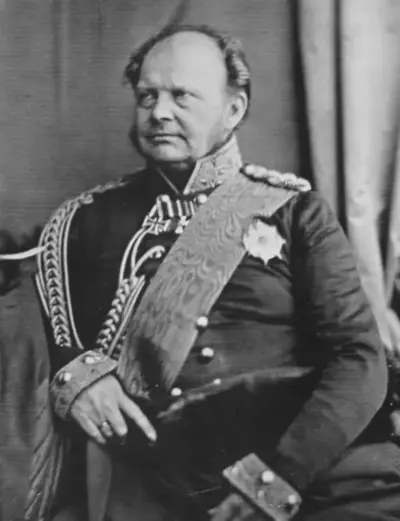
Frederick William IV, the eldest son and successor of Frederick William III of Prussia, reigned as King of Prussia from 7 June 1840 to his death. Also referred to as the "romanticist on the throne", he is best remembered for the many buildings he had constructed in Berlin and Potsdam, as well as for the completion of the Gothic Cologne Cathedral.
