Philip Gourevitch Quotes
Genocide, after all, is an exercise in community building.
Gourevitch, Philip. We Wish to Inform You That Tomorrow We Will be Killed with Our Families: Stories from Rwanda. Farrar, Straus and Giroux, 1998, p. 95.


One of the most murderous struggles in history was when Turkey was fighting Armenia. The peoples had, and still do have, a great hatred towards each other. The Turks had a large ethnic Armenian population and the Turkish government decided to “relocate” them. In the process many Armenians were brutally murdered, The Armenians however also butchered Turks whenever they could. The events were so brutal, that neither Turkey or Armenia teach about their own atrocities in their schools, but tell their students of the other’s atrocities. Historial denial governs this conflict and its war crimes.

The Armenian-Turkish enmity was vicious to the point that each people tried to kill and exterminate the other—men women and children. The atrocities committed by the Armenians were unfortunately matched by the Turks in what is now referred to as the “Armenian Genocide”—see {51838} The armed combatants amongst Turks and Armenians were in the minority yet each side slaughtered all members of the other whenever they could. The hatred still prevails – see {588211}. And Turks and Armenians both still accuse the other of atrocities of the period and appear in denial about their own violence.
First Published American Indian Author. His last public speech. He was referring to a horrible massacre of Christian Indians and the polarizing effect that such conflicts had. Whosoever publicly castigated a massacre of whites or Indians would be met by accusations of condoning the massacres of the other side and ignoring the inevitable and natural seeking of retaliation for future protection and revenge.


See Ferdinand I for the Bulgarian denial {601322}.

He was then a young Lieutenant.

The two groups of Christian minorities in Turkey then were the Greeks and the Armenians. The discrimination against those minorities had been so great that many sought independence for their areas and accepted and gave assistance to Russia and other “enemies” of Turkey. The Turks, instead of distinguishing between those who aided the enemy and those that did not, assumed that all Armenians and Greeks were guilty and began a program of ethnic cleansing and organized murder of the Christians—the Armenians in particular. Unlike Germany, which accepted its guilt for the Holocaust and organized their society to prevent anything like that from ever happening again, the Turks deny the Armenian Genocide and despite clear historical evidence to the contrary, claim that the Armenian deaths were “collateral damage” resulting from the war. This quotation is poignant in that by the time, the Western powers seriously challenged the Armenian genocide, most of the Armenians had been exterminated as Talat admitted.

This quotation distressed many ultra rightists who otherwise were avid followers of Mises. See {632407} for another quotation that distressed many European conservative devotees of Mises.
This was part of the continual conflict between the Muslims and the Eastern Orthodox Christians. The Greeks ended up doubling their territory.

Although a very aggressive military commander, Grant did not approve of proposals to have wars of extermination which many called for against different Native American tribes.


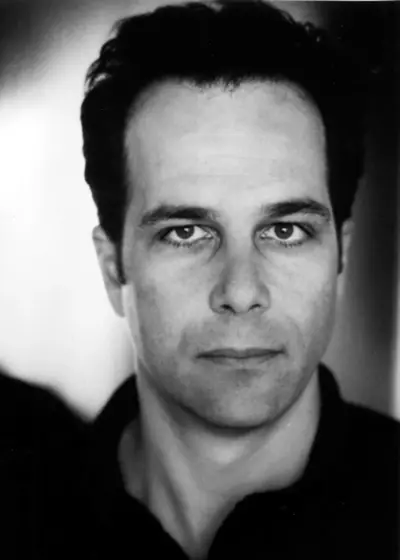
Philip Gourevitch (born 1961), an American author and journalist, is a longtime staff writer for The New Yorker and a former editor of The Paris Review. His most recent book is The Ballad of Abu Ghraib (2008), an account of Iraq's Abu Ghraib prison under the American occupation. He became widely known for his first book, We Wish to Inform You That Tomorrow We Will Be Killed with Our Families (1998), which tells the story of the 1994 Rwandan genocide.
