Lucretius Quotes
From the heart of the fountain of delight rises a jet of bitterness that tortures us among the very flowers.
Lucretius. On the Nature of the Universe. Translated by R. E. Latham, Penguin Books, 1951, p. 165.


In the 18th Century, the Islamic Barbary States combined their religious beliefs for Jihad against non believers with a classic criminal enterprise. They would authorize cosairs to outfit ships and attack Christian merchant ships on the high seas. They would capture the ship and the cargo, which would be split with the ruler of the country. The crew and passengers would by “rented out” as slaves until they would be ransomed, the proceeds of which would also be shared. To motivate a larger ransom, the captives were regularly tortured as well as worked almost to death. The Barbary Pirates encouraged the “slaves” to write to their relatives, friends and governments to try and raise the ransom. O’Brien’s ship was captured in 1785. He had been a slave for 4 years when he wrote this. See for a quote from a letter he sent Congress. Finally, after 10 years, O’Brien and those of his crew that were still alive were finally freed. O’Brien’s unusual experience and knowledge of the Barbary States qualified him as an expert and he was then appointed Consul-General to Algiers. Individual Christian countries were offered a “treaty” whereby for an annual payment of tribute to the Barbary country, the corsairs of that country would not attack ships flying their flag. The Christian country had to make 4 different tribute payments to each of the Barbary nations. Most of the European powers were paying the tribute even though some could easily defeat the Corsair navies in a war. The cost of outfitting a fleet for war was much more costly than paying the tribute. The new nation of the United States was good pickings for the Barbary pilots and there was a period of several decades where the Americans had to create a policy to pay tribute or go to war. At different times America did both.

Depressed by the Union defeat at Fredericksburg in January of 1963, Lincoln observed of the presidency:


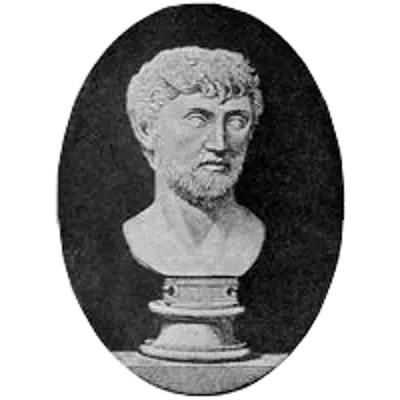
Titus Lucretius Carus (/ˈtaɪtəs luːˈkriːʃəs/ TY-təs loo-KREE-shəs, Latin: [ˈtɪtʊs lʊˈkreːtɪ.ʊs ˈkaːrʊs]; c. 99 – c. 55 BC) was a Roman poet and philosopher. His only known work is the philosophical poem De rerum natura, a didactic work about the tenets and philosophy of Epicureanism, and which usually is translated into English as On the Nature of Things. Lucretius has been credited with originating the concept of the three-age system that was formalised in 1836 by C. J. Thomsen.
