William Shockley Quotes
Frequently, I have been asked if an experiment I have planned is pure or applied science; to me it is more important to know if the experiment will yield new and probably enduring knowledge about nature. If it is likely to yield such knowledge, it is, in my opinion, good fundamental research; and this is more important than whether the motivation is purely aesthetic satisfaction on the part of the experimenter on the one hand or the improvement of the stability of a high-power transistor on the other.
Shockley, William. "Transistor Technology Evokes New Physics." Nobel Lectures, Physics 1942-1962, Elsevier Publishing Company, 1964, p. 344.

Most of the greatest scientific breakthroughs were motivated by a search for the truth, a desire to understand the world, and the joy of discovery, not utility. None the less, the results have had profound usefulness to humanity in most cases. After this basic research, there are other people who then specifically work to apply the basic research to improvement in the human condition. That is applied research. Each important basic research breakthrough spawns a host of applications that are then developed.


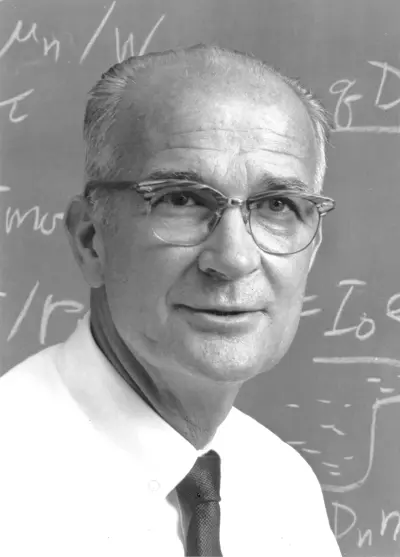
William Bradford Shockley Jr. was an American physicist and inventor. He was the manager of a research group at Bell Labs that included John Bardeen and Walter Brattain. The three scientists were jointly awarded the 1956 Nobel Prize in Physics for "their researches on semiconductors and their discovery of the transistor effect".
