Nathan Bedford Forrest Quotes
Forward, men, and mix with them.
Hurst, Jack. Nathan Bedford Forrest: A Biography. Alfred A. Knopf, 1993, p. 195.


In the play the two characters are a Russian and American disarmament negotiator:

Commenting on the hostility which greeted some returning Vietnam veterans:


Cunningham was part of an American Diplomatic Delegation negotiating with the Vietnamese. He had been an Naval Ace Fighter Pilot during the Vietnam War. He was notorious for his lack of tact.


At the time 18 year old Douglas wanted to enlist to fight in the Philippines where his father was about to be given military command. Young Douglas took his father’s prescient advice and attended West Point instead. In an amazing historical precursor, General Arthur MacArthur ended up in policy disputes with the President over how aggressive American tactics should be. President Taft relieved MacArthur of his command.
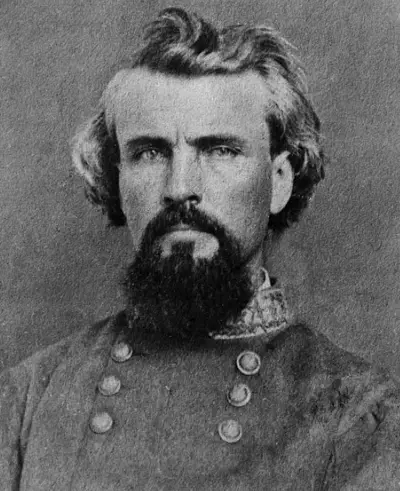
Nathan Bedford Forrest was a prominent Confederate Army general during the American Civil War and the first Grand Wizard of the Ku Klux Klan from 1867 to 1869. Before the war, Forrest amassed substantial wealth as a cotton plantation owner, horse and cattle trader, real estate broker, and slave trader. In June 1861, he enlisted in the Confederate Army and became one of the few soldiers during the war to enlist as a private and be promoted to general without any prior military training. An expert cavalry leader, Forrest was given command of a corps and established new doctrines for mobile forces, earning the nickname "The Wizard of the Saddle". His methods influenced future generations of military strategists, although the Confederate high command is seen by some commentators to have underappreciated his talents. Although scholars generally acknowledge Forrest's skills and acumen as a cavalry leader and military strategist, he has remained a controversial figure in Southern racial history for his main role in the massacre of several hundred Union soldiers at Fort Pillow, a majority of them black, coupled with his role following the war as a leader of the Klan.
