Napoleon Bonaparte Quotes
For my part, it is not the mystery of the incarnation which I discover in religion, but the mystery of social order, which associates with heaven that idea of equality which prevents the rich from destroying the poor
Pelet de la Lozère, Privat Joseph Cléophas. Napoleon in Council: Or, the Opinions Delivered by Bonaparte in the Council of State. Translated by Basil Hall, Robert Cadell, 1837, p. 236.

She was observing that while some autocrats try to change societies like Catherine the Great, and Kamal Attaturk, many try to maintain the traditional status quo like Franco of Spain and Kaiser Wilhelm of Germany


1st Earl of Balfour. Balfour was arguing against a united Ireland having autonomy whereby the wealthier, more Protestant, Northern Ireland would be dominated by Southern Ireland. See his political opponent, William E. Gladstone, for a similar view of the “superiority” of Northern Ireland.


While this is very true in the long term, the Church in the short term has almost always supported actively or by its neutrality, the ruling class as opposed to those who would make revolutionary change even to the extent of participating in the torture, murder, and intimidation of most of the Catholics in the society. The ruling class, in turn, supported the Church and used the power of the state to enforce religious doctrine and prevent alternative religious views and practices to prevail even if only with small minorities. See {632407} for another Mises quotation articulating examples of this.


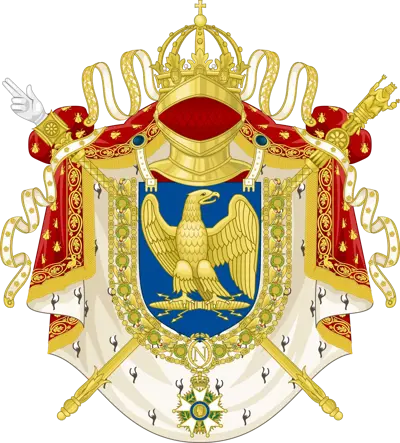
Napoléon Bonaparte was a French military and political leader of Corsican descent. He rose to prominence during the French Revolution and led several successful campaigns during the Revolutionary Wars. As Napoleon I, he was Emperor of the French from 1804 until 1814, and again in 1815. Napoleon dominated European and global affairs for more than a decade while leading France against a series of coalitions in the Napoleonic Wars. He won most of these wars and the vast majority of his battles, building a large empire that ruled over continental Europe before its final collapse in 1815. One of the greatest commanders in history, his wars and campaigns are studied at military schools worldwide. He remains one of the most celebrated and controversial political figures in human history.
