Mahatma Gandhi Quotes
For me to dominate the Congress in spite of these fundamental differences is almost a species of violence which I must refrain from.
Gandhi, Mahatma. "Statement to the Press, 17 September 1934." The Collected Works of Mahatma Gandhi, vol. 58, Publications Division, Ministry of Information and Broadcasting, Govt. of India, 1974, p. 405.

The 2014 House of Representatives was probably the worst in American History. The Republican Speaker of the House did not have any control over the Tea Party wing of his caucus, but they controlled him in most instances. Even when he made bargains with the President and the Democrats, he could not get his caucus to go along. Almost no legislation was passed and the few bills that were passed were symbolic, were never considered by the Senate and the President did not even have to exercise his power of veto during that Congress.


Senator Conkling was the Republican Leader of the Republican Party and a party boss of the old school. Hays was a reformer, especially about appointments where he generally tried to pick the most meritorious candidate instead of the party loyalists desired by Conkling. There was (and still is) a tradition in the Senate that the Senators from the state of residence of any Presidential appointment had a veto of any Federal appointments in the state. Conkling, in addition to being the party leader, was the senior senator from New York and wanted two party loyalists for the jobs. Hayes appointed the better qualified men and decided to fight for the nomination of his candidates, but expected tha Conkling was strong enough to assure that the Senate would not confirm Hayes’ New York appointments. See {622341} for the outcome.


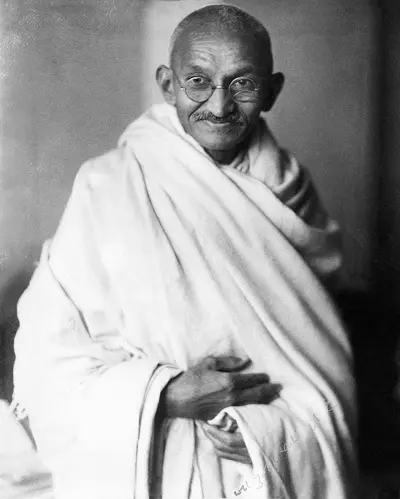
Mohandas Karamchand Gandhi was an Indian lawyer, anti-colonial nationalist, and political ethicist, who employed nonviolent resistance to lead the successful campaign for India's independence from British rule, and in turn inspired movements for civil rights and freedom across the world. The honorific Mahātmā (Sanskrit: "great-souled", "venerable"), first applied to him in 1914 in South Africa, is now used throughout the world.
