Winston Churchill Quotes
For good or for ill, air mastery is today the supreme expression of military power and fleets and armies, however vital and important, must accept a subordinate rank.
Churchill, Winston. Winston S. Churchill: His Complete Speeches, 1897-1963. Edited by Robert Rhodes James, vol. 7, Chelsea House Publishers, 1974, p. 7806.


The Egyptians had received the latest Russian planes and weapons and outnumbered the Israeli Air Force 3 to 1. Within a year, the entire Egyptian Air Force was virtually destroyed. See {606125} for his equally unrealistic assessment of Egyptian air defenses.


There were few military thinkers at that time who would agree with Goebbels on this point.

He was one of the last generation of military officers who did not have the education, training, and political sophistication to avoid picking one of the several factors for going to war, and making it seem that that was the most important or only one. Oil is always a factor in the Middle East, but there were other major causes for our going to war.


New York Governor Hugh Carey made extensive use of state airplanes and was discovered to have 31 pilots on the state payroll:

This appears to be the first public call for Anti-Ballistic Missile Weapons & Systems. To many it is surprising that in 1946, there would be concern about missile defense, however during WWII, the Germans, violating the laws of war, struck London and other English cities with V2 rocket—the first ballistic missiles. England had suffered many civilian casualties and missile defense was a high priority for them.

The Seals who conducted the raid captured all the computers and documents that there were in bin Laden’s compound.


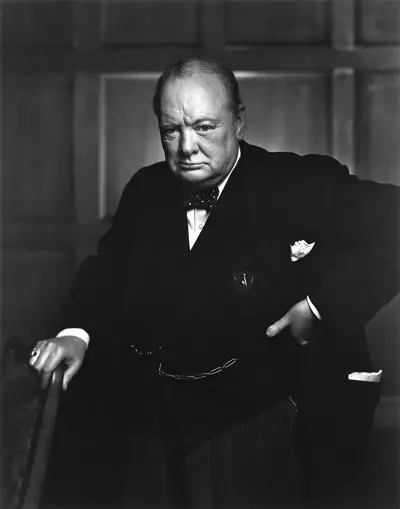
Sir Winston Leonard Spencer Churchill, KG, OM, CH, TD, DL, FRS, RA was the Prime Minister of the United Kingdom from 1940 to 1945, during the Second World War, and again from 1951 to 1955. Apart from two years between 1922 and 1924, Churchill was a Member of Parliament (MP) from 1900 to 1964 and represented a total of five constituencies. Ideologically an economic liberal and imperialist, he was for most of his career a member of the Conservative Party, as leader from 1940 to 1955. He was a member of the Liberal Party from 1904 to 1924. Churchill was also well known for his military career and as a historian, painter and writer, and among his many awards was the Nobel Prize in Literature.
